Strangeness is not, does not exist; it inhabits the perspective of those who look. There is the strangeness caused by the ancestral – rites, tales, norms, myths – and there is the strangeness at what is present or what comes, like those living in a garment that is too big or that someone has given them.
The Chant of the Sibyl explores the first of these sensations. It encapsulates the weight of over two thousand years of tradition – from Roman and Greek polytheisms to contemporary secularity, filtered by the critique of the capitalist system and of ecoanxiety, once the appropriationist re-reading of Christianity has been overcome – and places it, like a distorting mirror or like a problem, before the eyes of today’s individuals. And these see in it an end of the world that they can construct: a cloak to write on and fill. The lyrics of a visionary song that only women and children can sing. Treble voices. Sharp voices. Faltering voices. Voices that, with eyes closed, can be interpreted as non-binary or queer; halfway between puberty and the potential reproducibility of bodies. Voices that go to – and sometimes come from – failed places.1
1
"Under certain circumstances, failing, loosing, forgetting, unmaking, undoing, unbecoming, not knowing may in fact offer more creative, more cooperative, more surprising ways of being in the world."
Halberstam, Jack. The Queer Art of Failure.
Durham, North Carolina: Duke University Press, 2011.
Listen to one of the sound pieces of CROP.
⬇︎
2
"The shock of the Anthropocene creates confusion. Nothing is now as we thought it was. What is a human being, what is an object, what is nature? We are living in a state of conceptual instability, of unsayability: we lack the right words to describe the Anthropocene. (...) The problem is that the ruin, debris and dust of our era are not like those of other eras. Their temporality is different, as are the effects of this temporality. Because most of the materials used in pre-industrial societies disappear when buried or exposed to the elements (organic materials) or are basically neutral (the granite of a wall, the clay of a pot). In contrast, radioactive waste remains dangerous for thousands of years – the average life of plutonium-239 is 241 centuries: more than 800 human generation −."
González Ruibal, Alfredo. Sentir el Antropoceno
[catalogue of the exhibition Hiperobjectes o ésser en tremolor, curated by Patricia Marqués].
Barcelona: Can Felipa Arts Visuals, 2022.
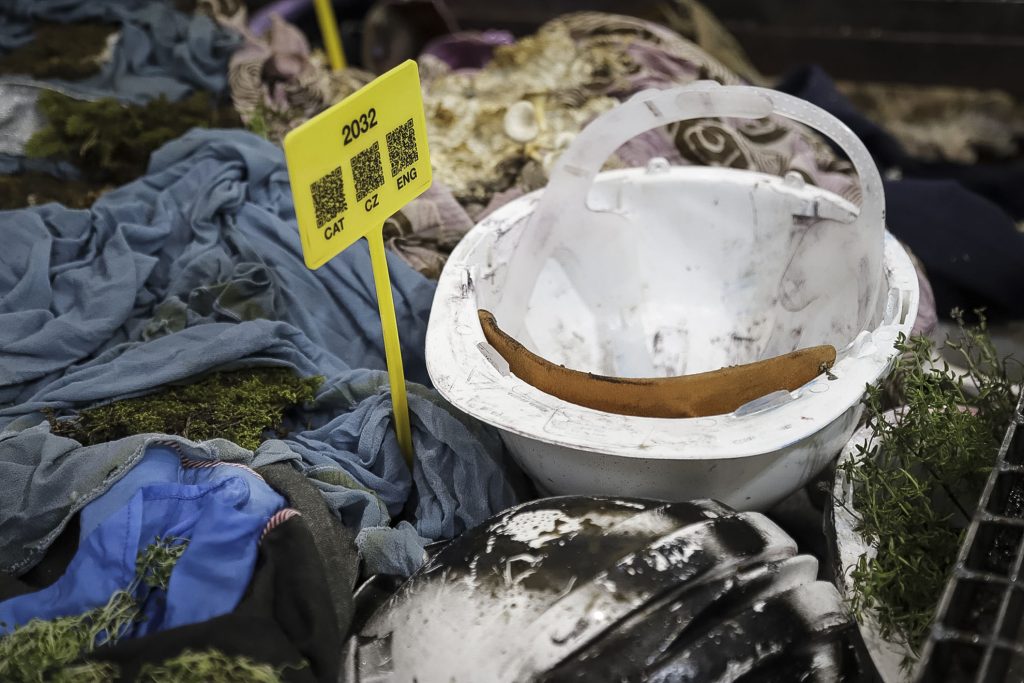
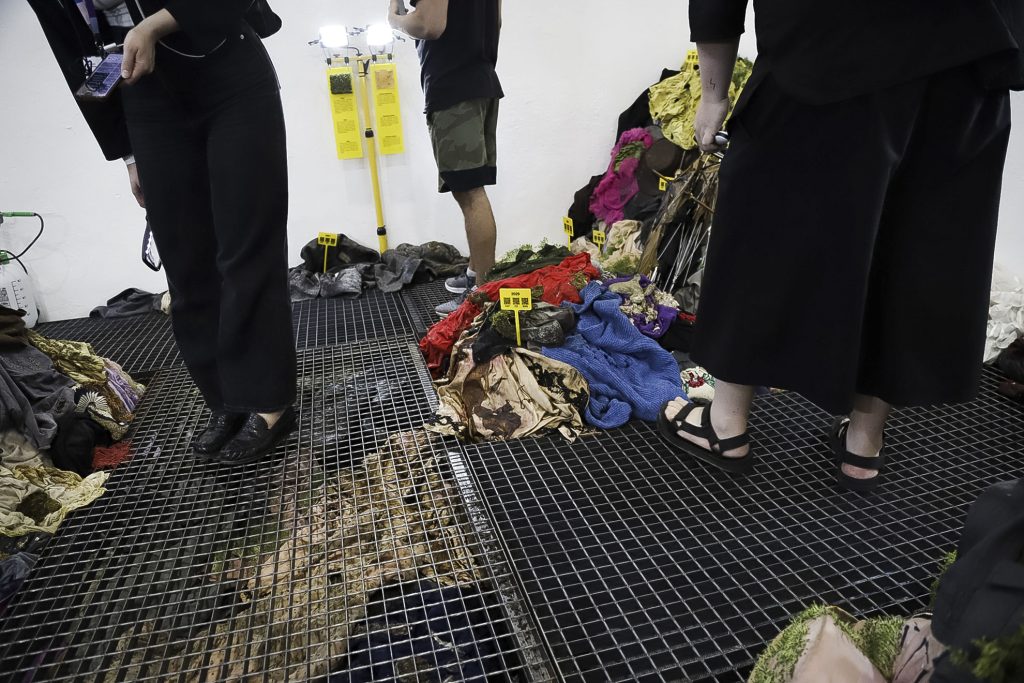
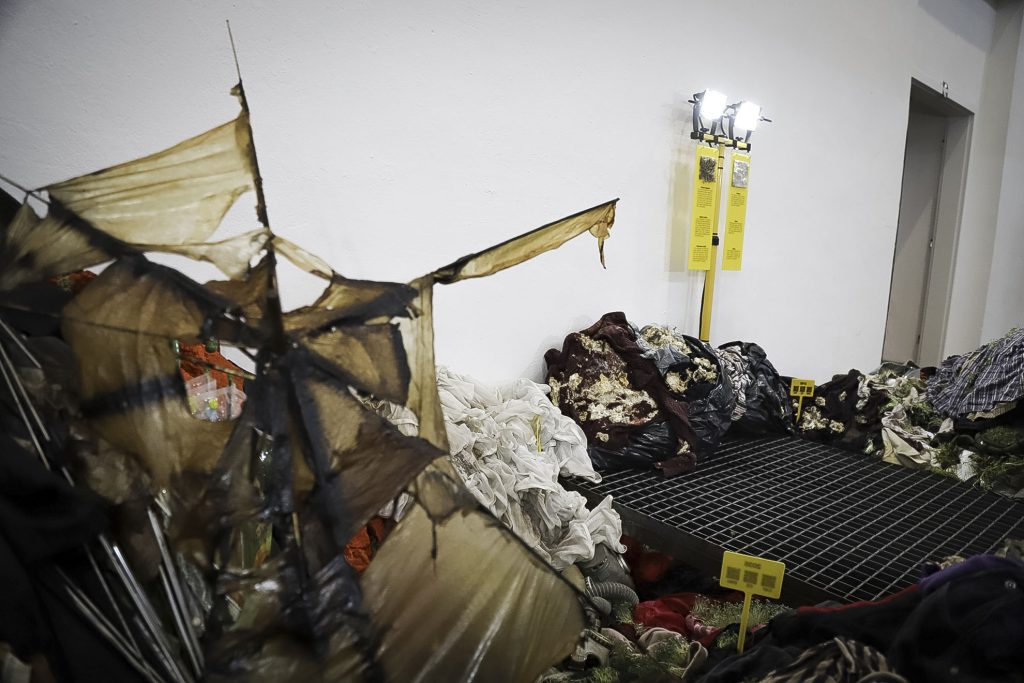
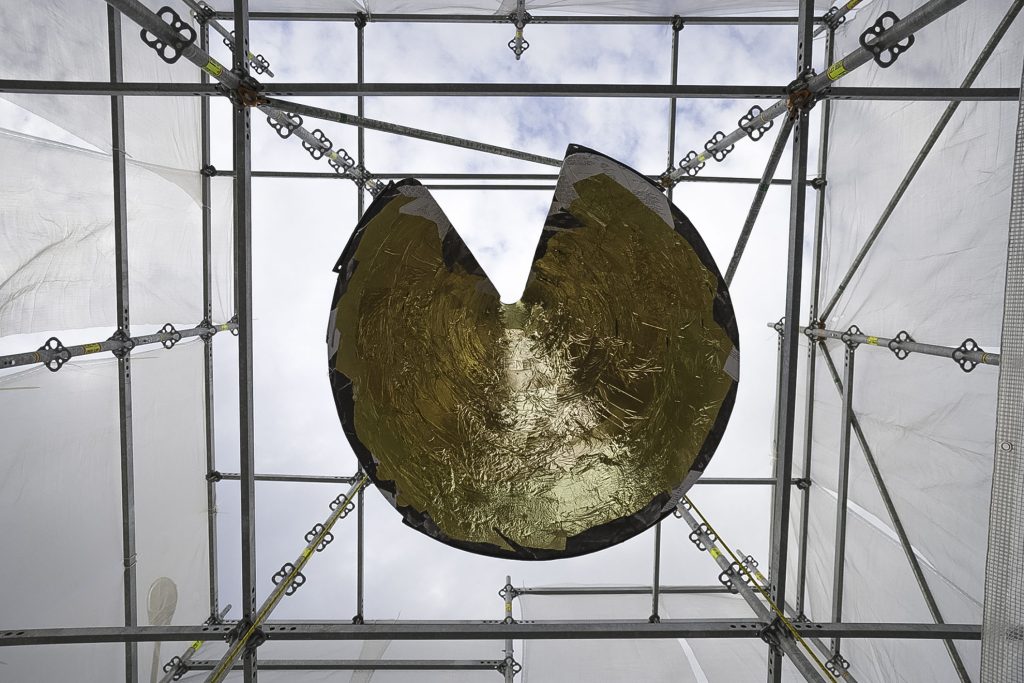
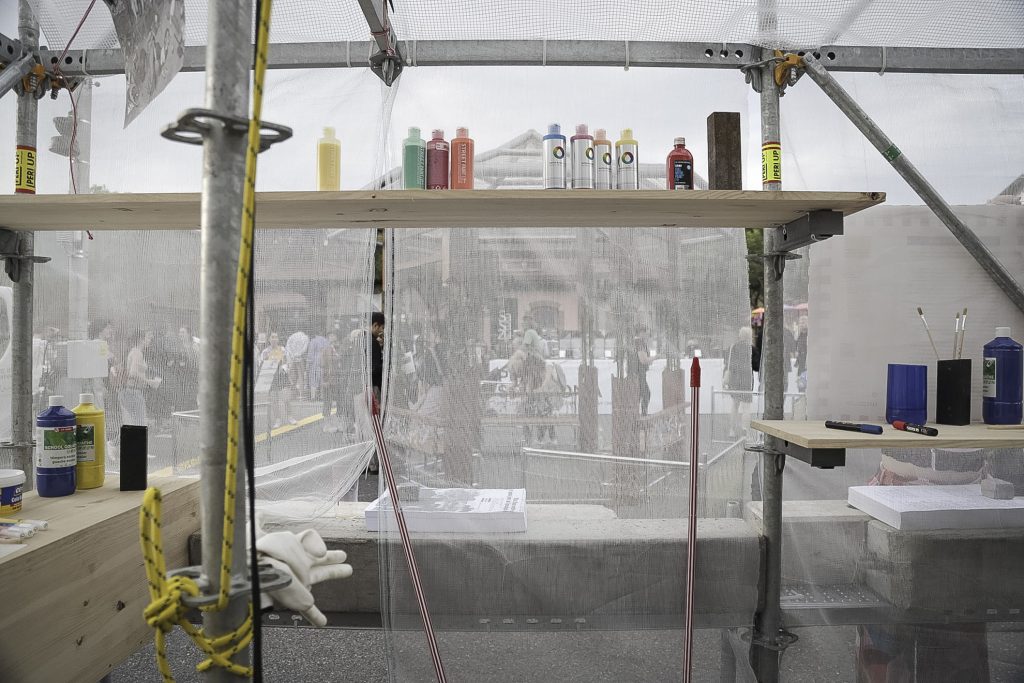
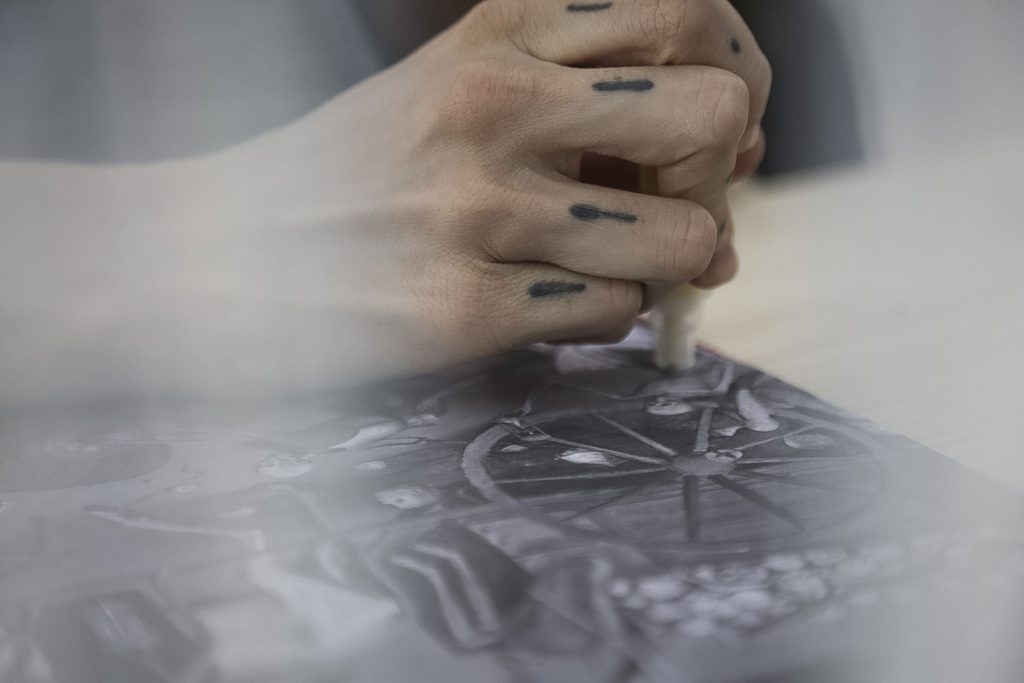
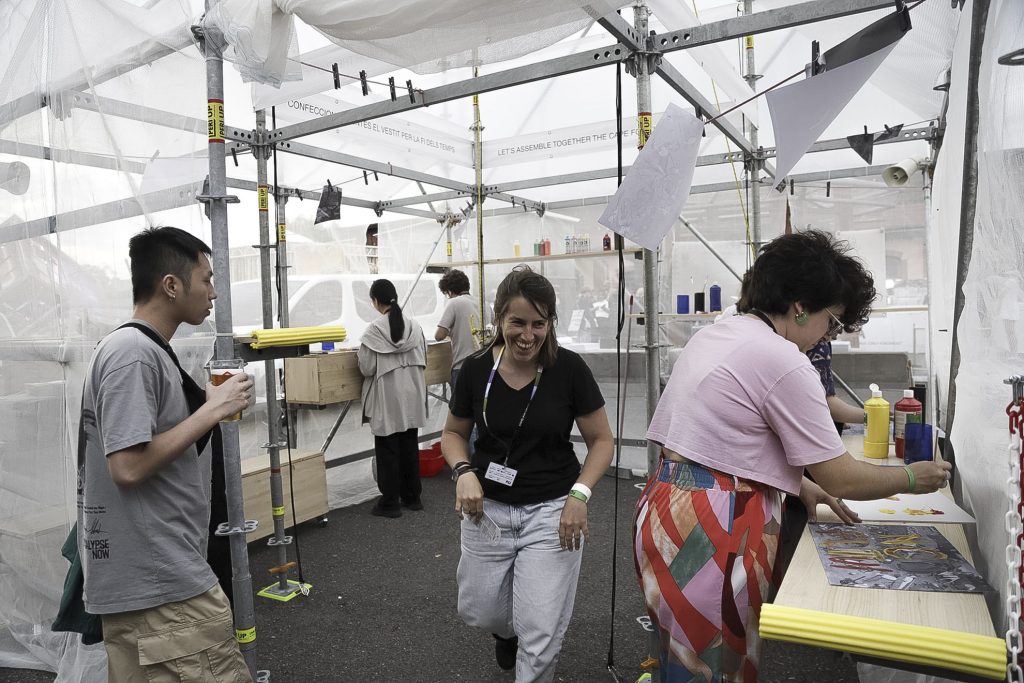
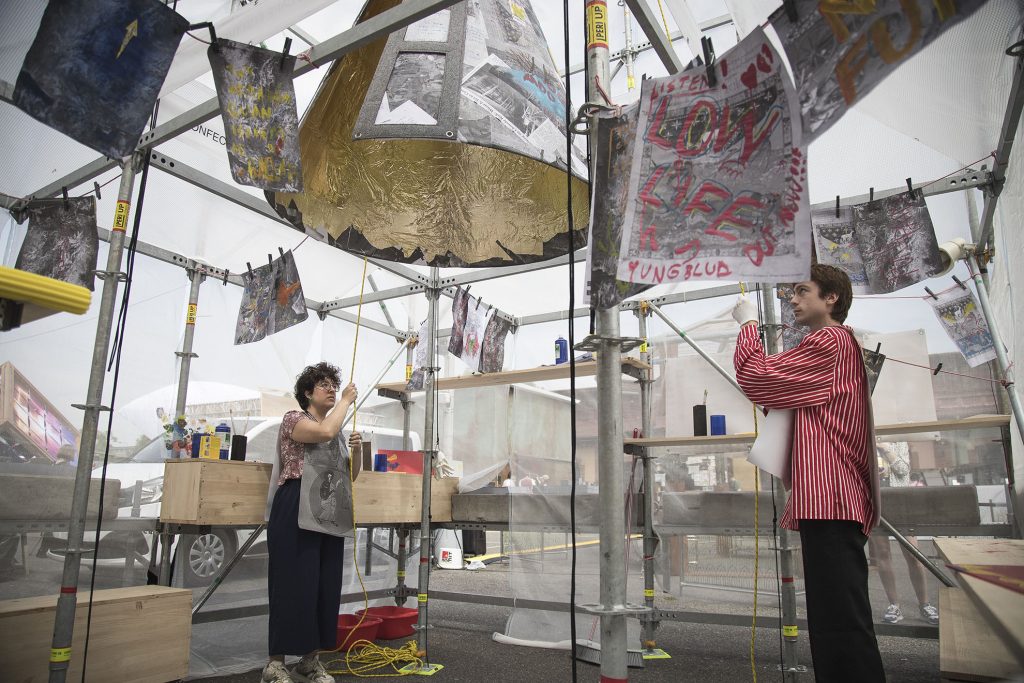
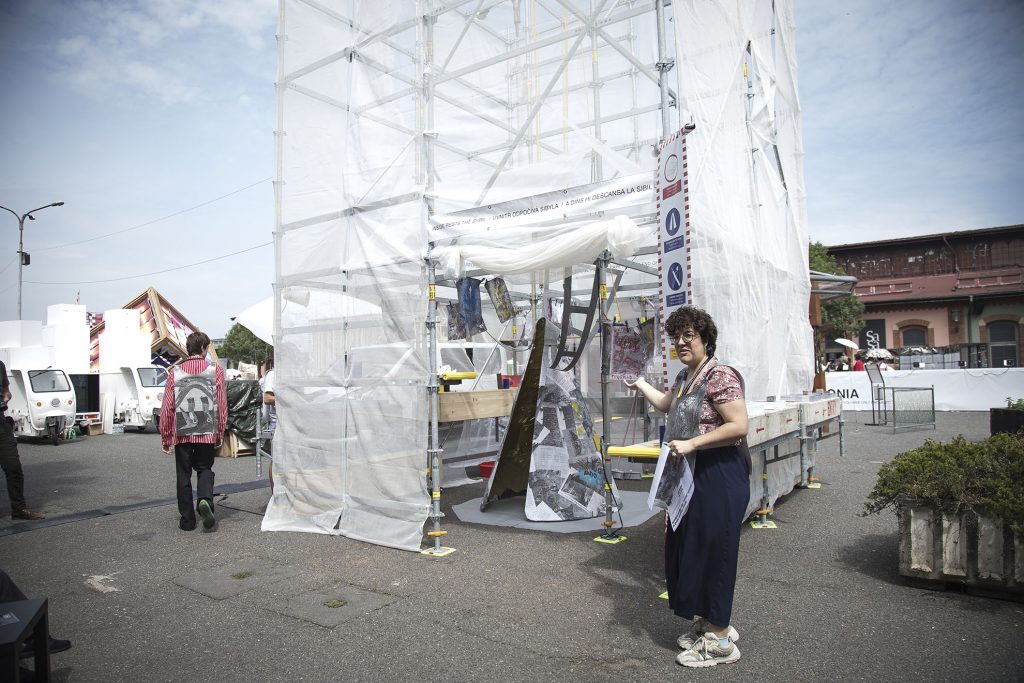
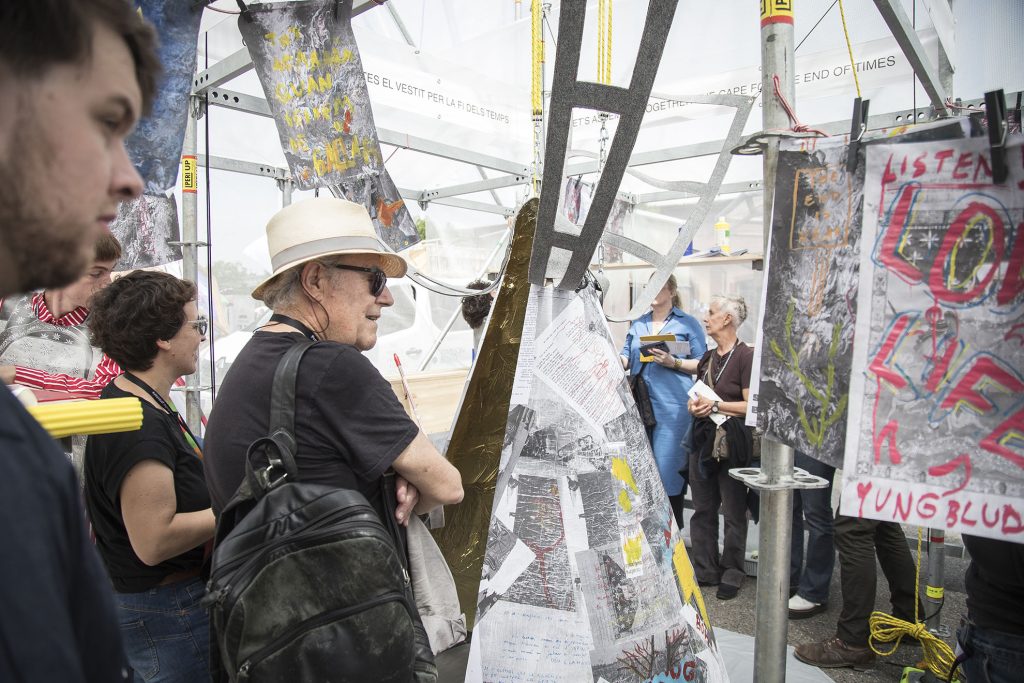
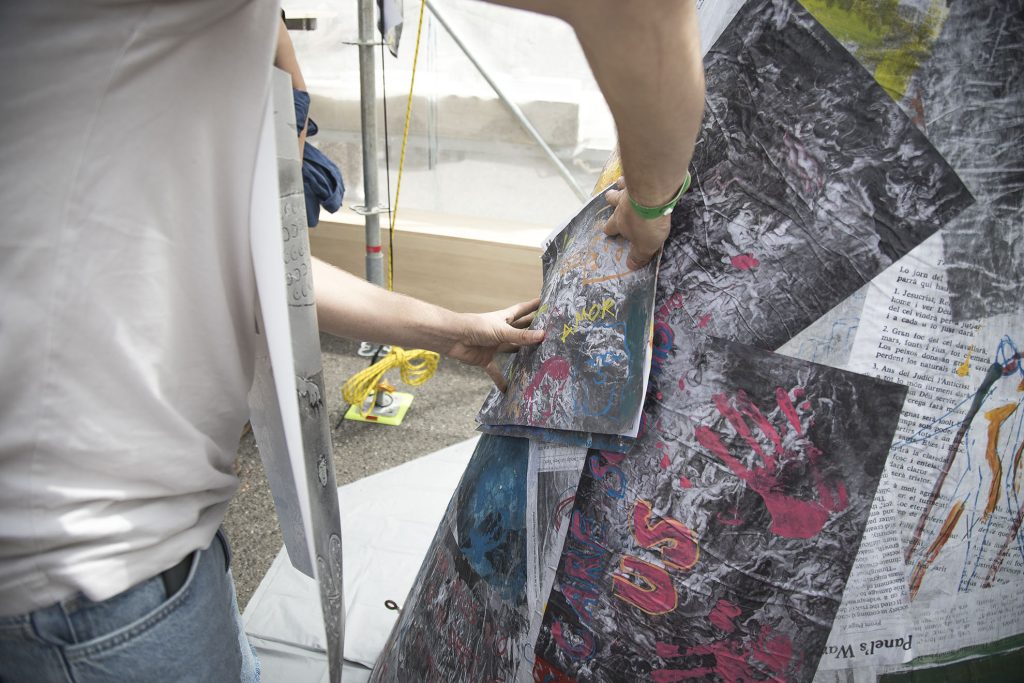
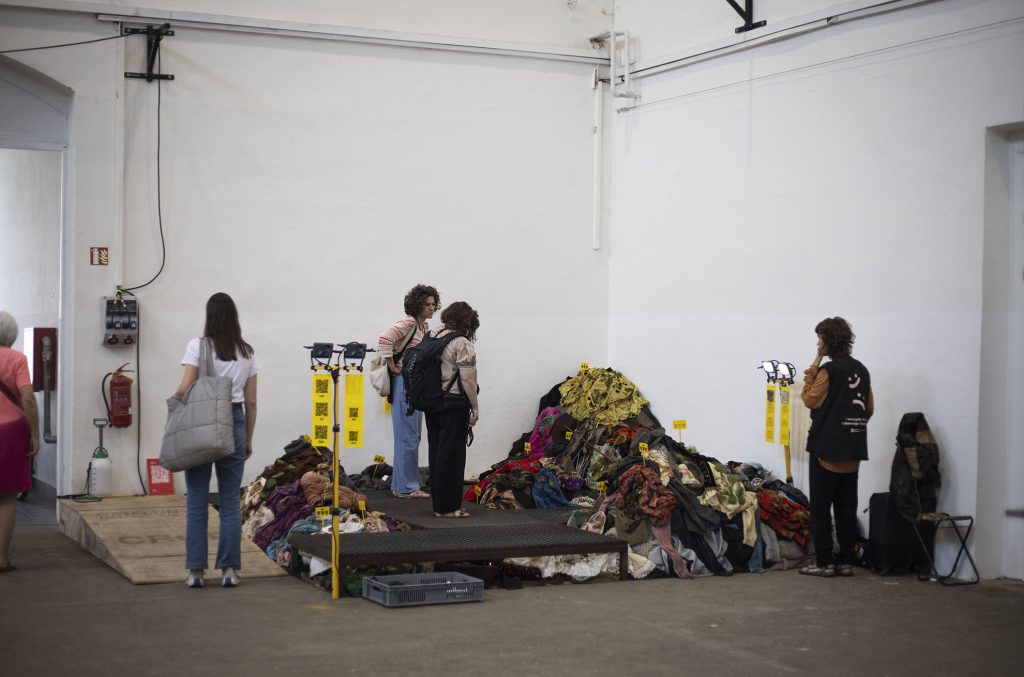
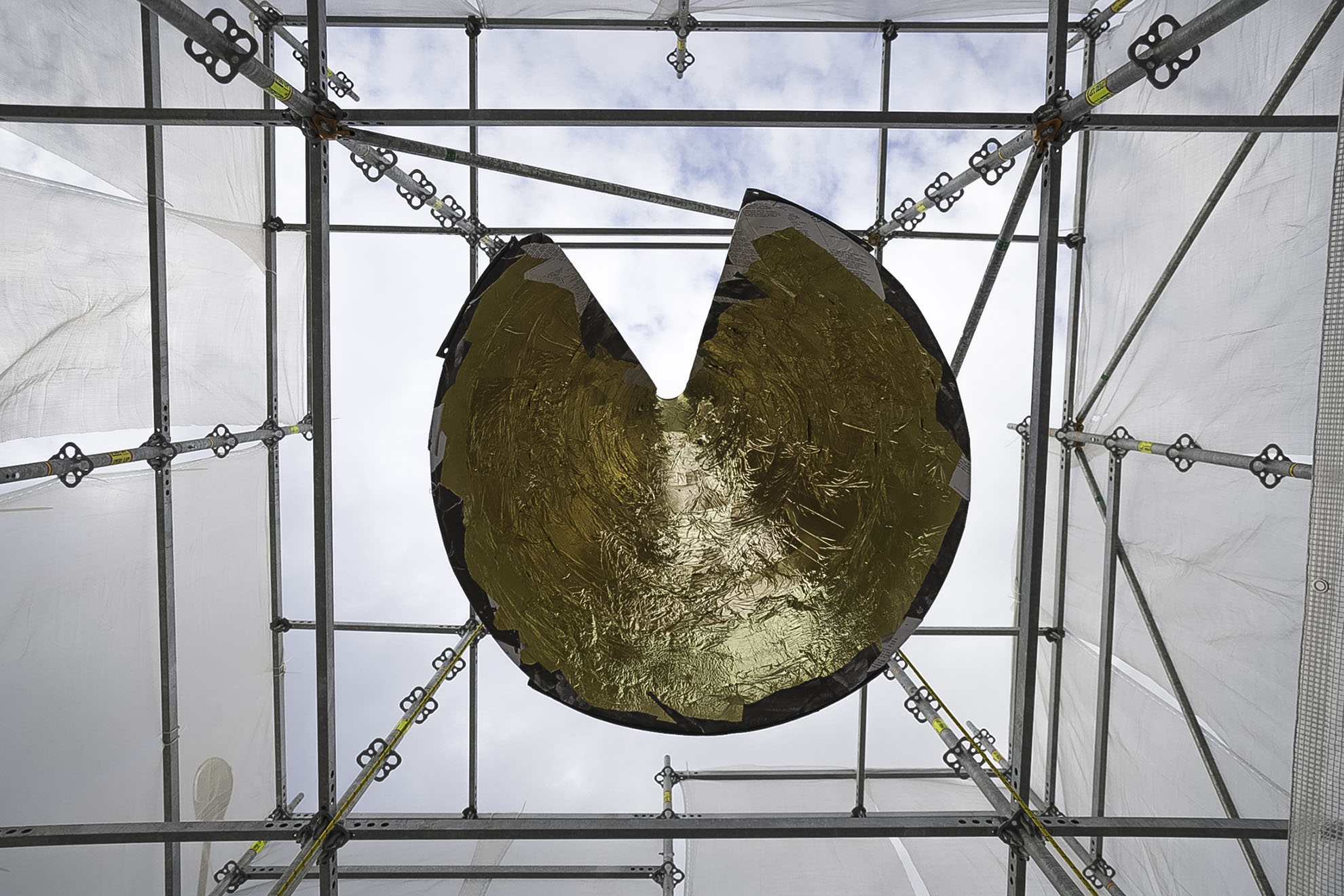
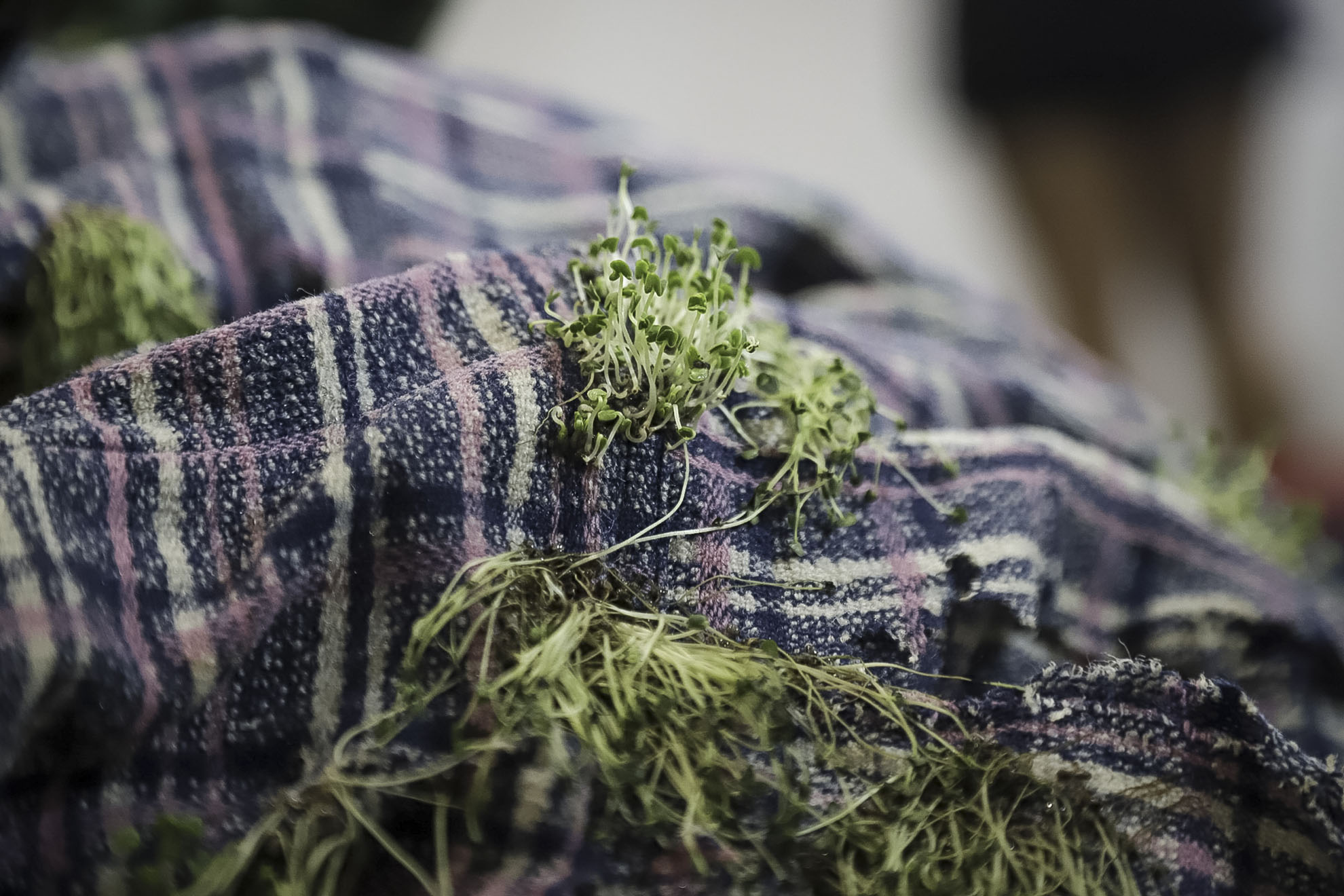
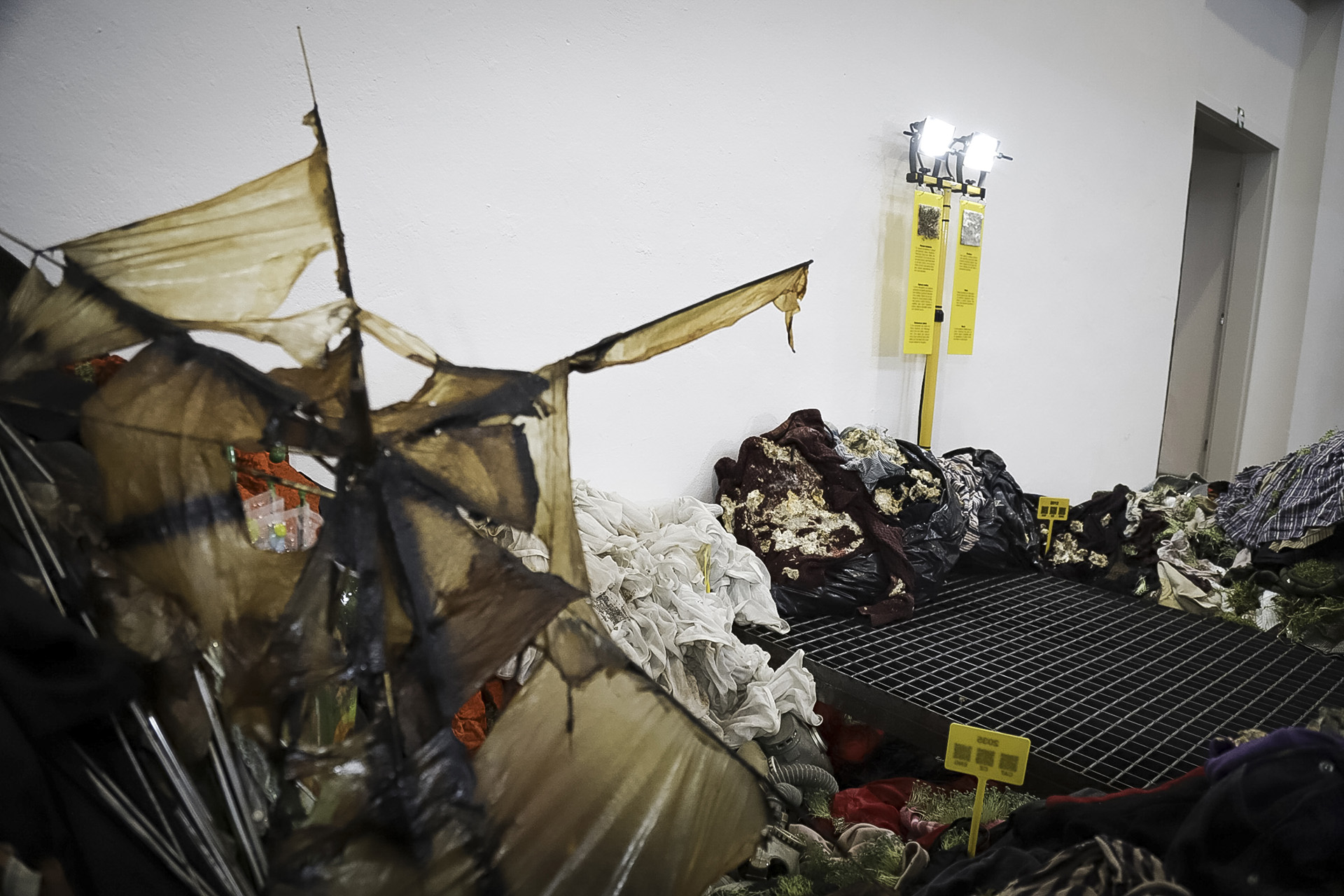
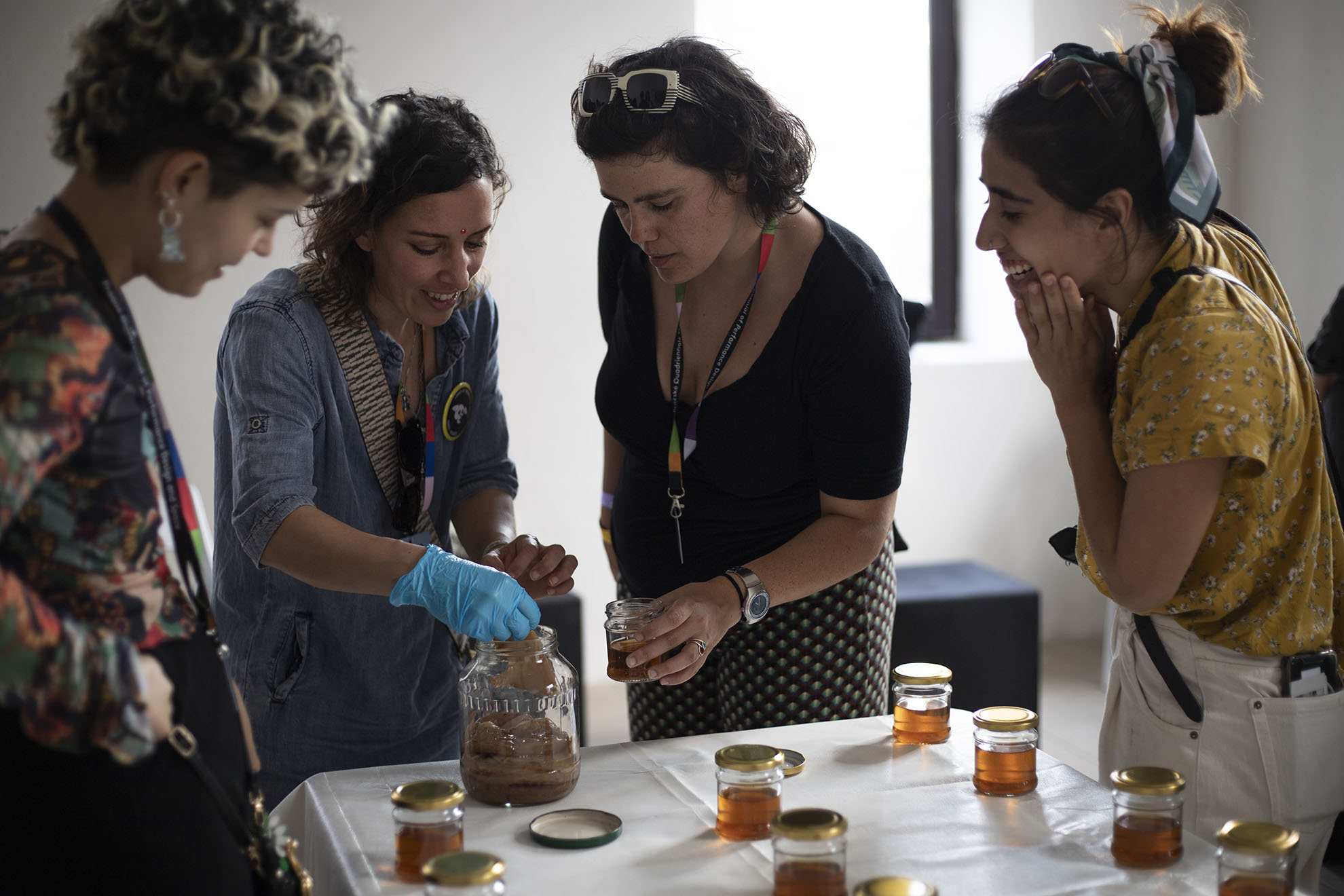
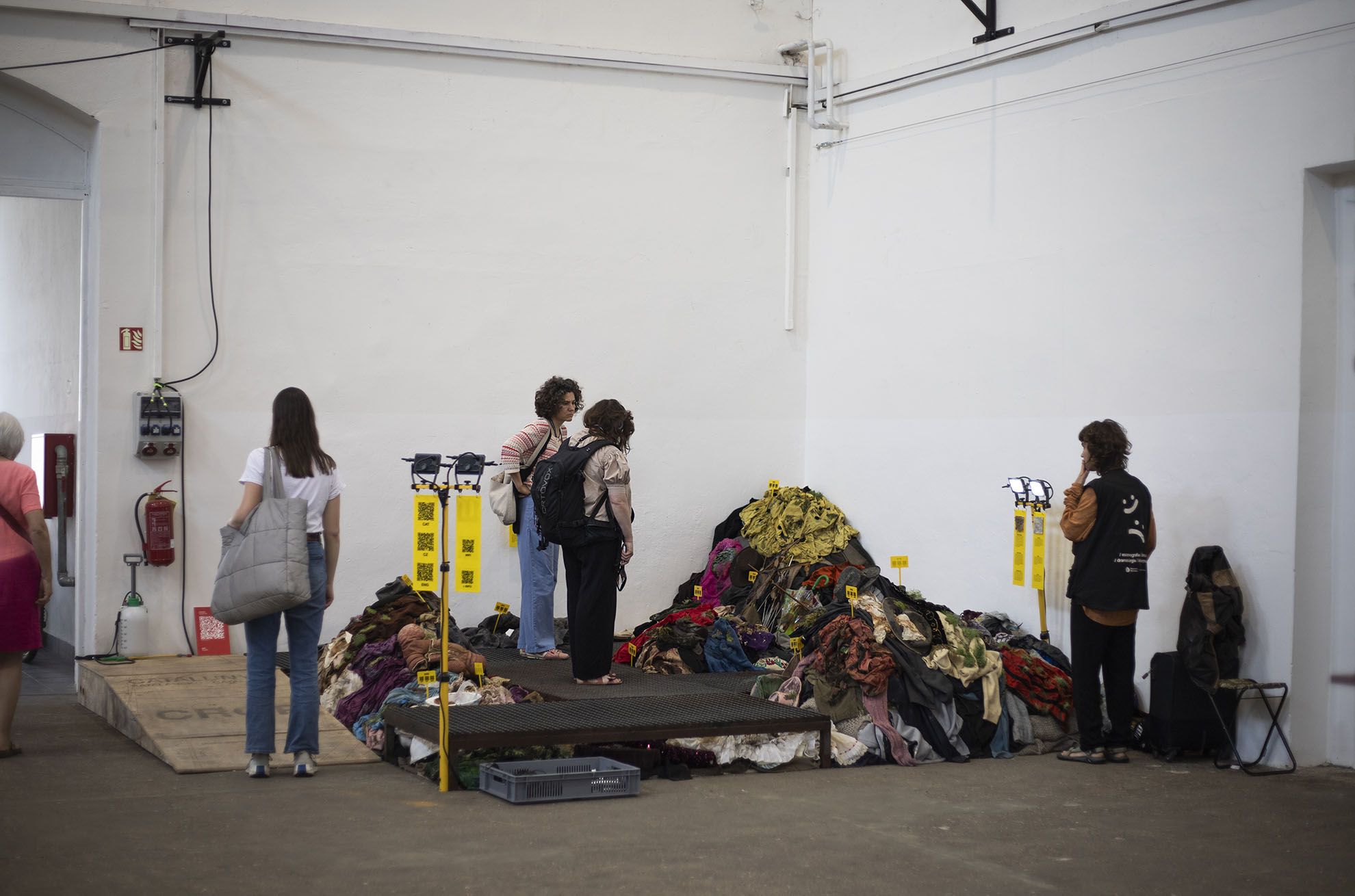
CROP projects this strangeness into the future. It invites us to look at the remains of an unknown world once this world has been exhausted, whether because it has been destroyed or because it has gone mouldy, thereby becoming itself and another in new lives. The stupefaction that this brings about, the impossibility of naming what is new or has not yet come, is the “shock of the Anthropocene” discussed by Alfredo González Ruibal, archaeologist at the CSIC (Spanish National Research Council).2 Srangeness can also mean trying to say the indescribable, trying – literally – to read the damaged labels of what cannot be easily grasped.
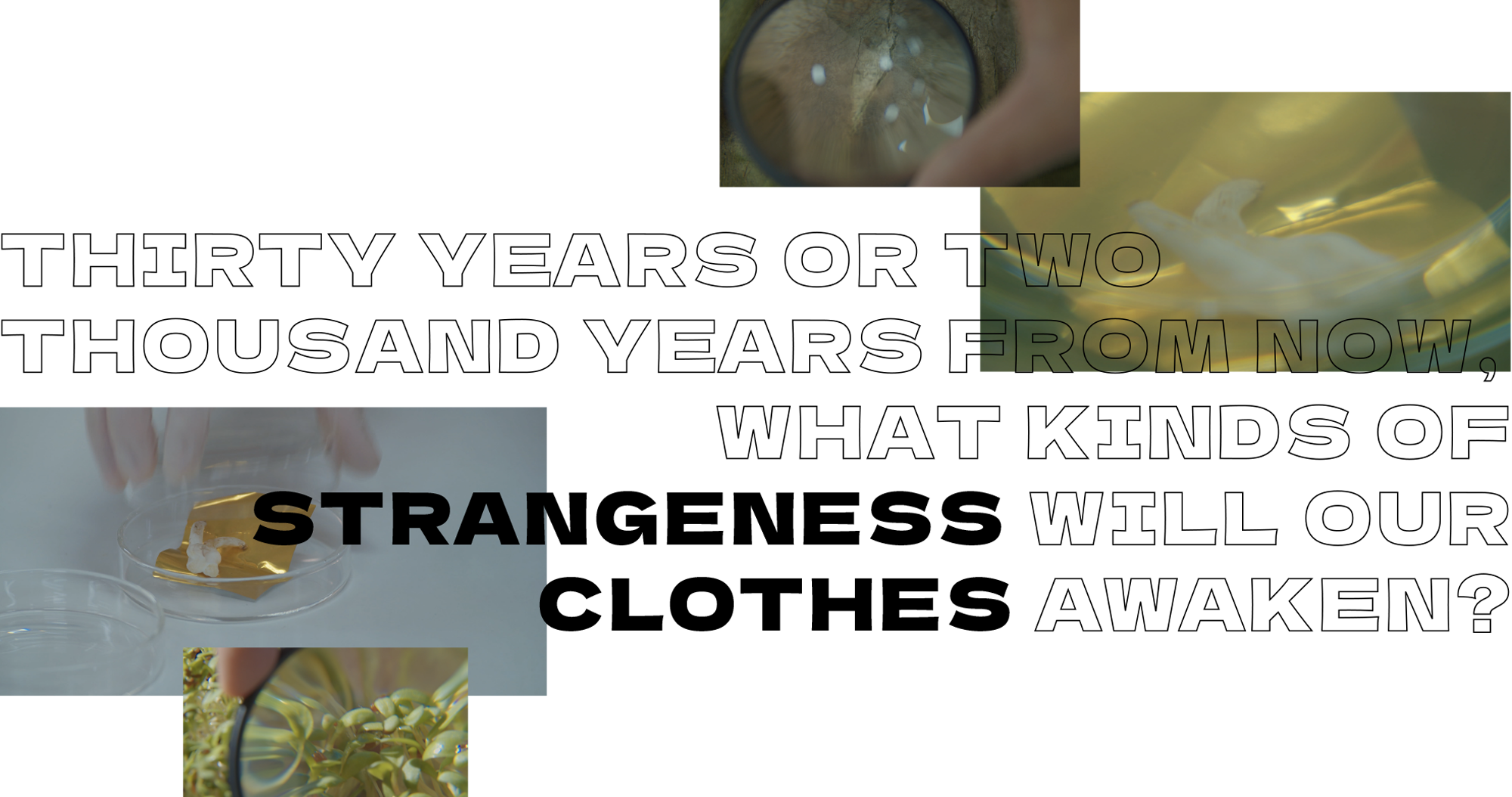
Thirty years or two thousand years from now, what kinds of strangeness will our clothes awaken? Strangeness can also be expressed in the form of prophecy.
Sebastià Portell
The concept that has shaped the 2023 Quadriennal: RARE
Each edition of the Prague Quadrennial of Performance Design and Space is structured around one or more concepts that give a sense of continuity and cohesion to the various creations that participate. They are broad concepts that allow for different approaches and points of view, designed to activate reflection on contemporary scenographic practice. On this occasion, the team of the Artistic Director Markéta Fantová has proposed THE RARE, what is strange, infrequent. This makes perfect sense in the post-pandemic context in which it was formulated, when many theatres were still closed, courses were held online, and the future envisioned by the PQ was uncertain. Meeting again in Prague was the opportunity to share utopias and dystopias through the theatre and scenography of the future based on the specificities of our experiences, cultures and traditions, diverse and particular, unique and perhaps strange in the eyes of others. For each section, there has been specific development of the theme.
"We would like to invite you to share the RARE: art springing out of ideas, materials, artistic approaches, and design practices that connect to the human level from within your environment, with its genius loci and unique situation. In the current state of precarity, uncertainty, and epochal change, we call on performance designers, scenographers, and performance practitioners to use their RARE imagination and creativity to help us envision what the world and theatre could look like in the post-pandemic future. [...] Since we have all been deprived of meeting in the same physical space for quite some time, let’s turn PQ 2023 into the RARE opportunity to move from virtual spaces into specific places offering an in-person experience, in which physicality and materiality of scenography become central: where your senses and predicaments will be taken into account."3
3
Extracted from the official website of the Quadriennal. You can read the full text of the PQ curatorial guidelines by clicking on the following link.
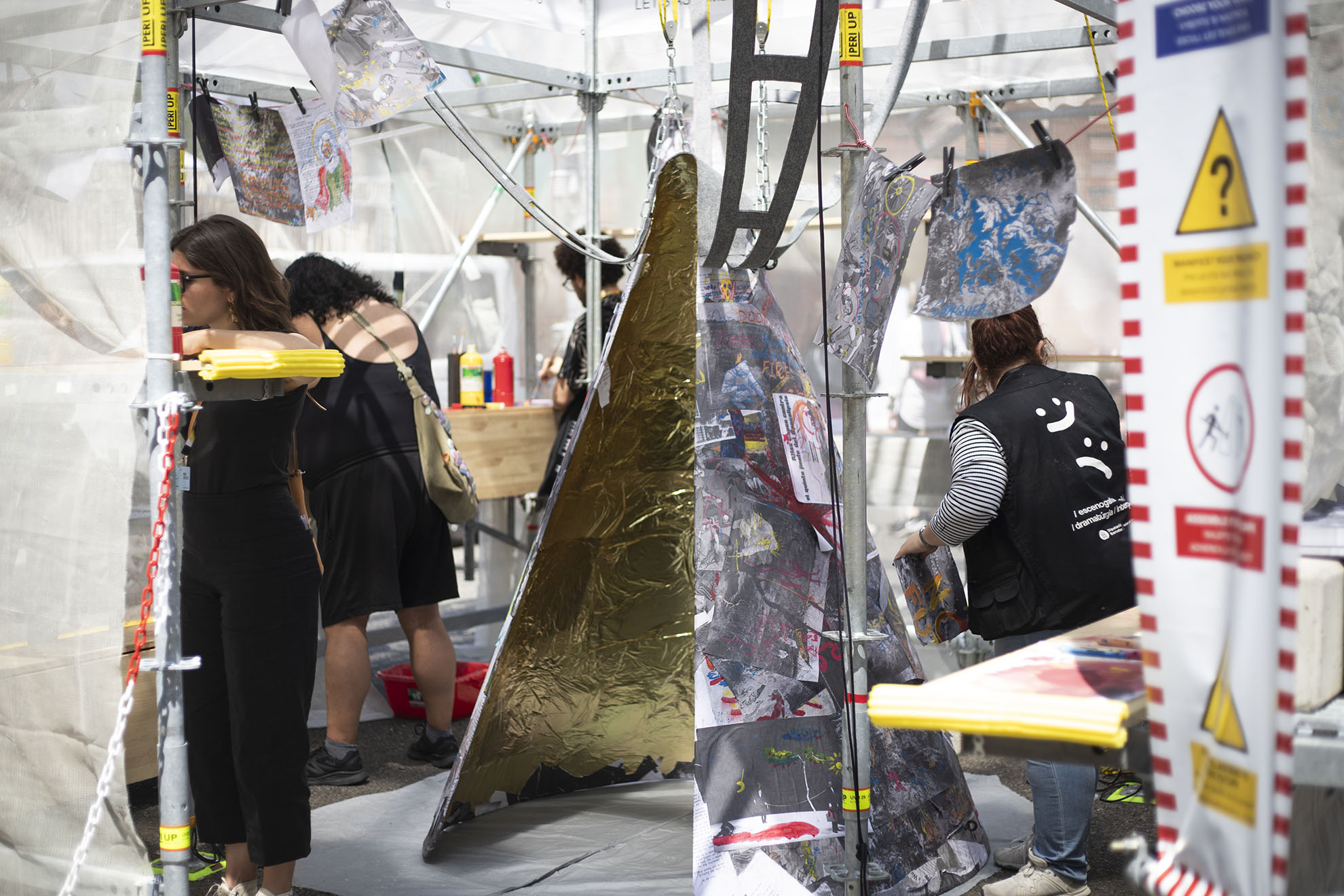
At the Student Exhibition, young creators are invited to talk about RARE Stories of Unique Places. An invitation to review and be inspired by nearby culture to create and share new scenographic experiences that are equally personal and clearly unique.
“We are inviting creative interventions that take inspiration in your local knowledge, your local culture and identity – especially if you believe that your local ideas, materials, artistic approaches connected to communities, and genius loci of your place can bring inspiration to new and visionary works of performance design/scenography. With that intention, we ask participating schools and emerging designers to create an exhibition (or an immersive experience space) based on, or inspired by, the cultural knowledge of a place. We believe that the unique process of transformation of these local sources of imagination into new and RARE works of performance design/scenography will actively contribute to the sharing of stories to others from around the world. We encourage you to create scenographic experiences, based on this local knowledge, in which your performance design fully engages the participating audience’s senses, emotions, and perceptions."
For the Countries and Regions Exhibition the subtitle proposed is: RARE Visions.
“In critical times of uncertainty, precarity, and change – like ours – performance designers, scenographers, and all performance practitioners, in the widest sense of the word, play an especially important role in society: to imagine, visualize, and even create rare visions of the future. These may be of various kinds – inspirational, visionary, or cautionary. It is the unique power of performance design/scenography to immerse one’s mind and body in our possible futures, to give hope, and so become a catalyst for positive change. [...] These RARE future visions, imaginations, and predictions, that bring us together, profoundly touch our hearts, and open up potential for change."
Fragments II: RARE Imagination / RARE Worlds
The Fragments section reaches the second edition, putting the focus of the RARE concept on the ability of the models to generate RARE Imaginations or evoke RARE Worlds through the magic of these objects specific to the scenography that play with scales and small format.
“The only way we can experience performance design/scenography in its true form is through a live performance. After the performance is over, all that’s left are fragments of design work, such as models, plans, drawings of sets, and costumes. Those fragments are pieces that open a small window into its creator’s mind and help us understand the design process that takes place before the production comes to life."
Strangeness is not, does not exist; it inhabits the perspective of those who look. There is the strangeness caused by the ancestral – rites, tales, norms, myths – and there is the strangeness at what is present or what comes, like those living in a garment that is too big or that someone has given them.
The Chant of the Sibyl explores the first of these sensations. It encapsulates the weight of over two thousand years of tradition – from Roman and Greek polytheisms to contemporary secularity, filtered by the critique of the capitalist system and of ecoanxiety, once the appropriationist re-reading of Christianity has been overcome – and places it, like a distorting mirror or like a problem, before the eyes of today’s individuals. And these see in it an end of the world that they can construct: a cloak to write on and fill. The lyrics of a visionary song that only women and children can sing. Treble voices. Sharp voices. Faltering voices. Voices that, with eyes closed, can be interpreted as non-binary or queer; halfway between puberty and the potential reproducibility of bodies. Voices that go to – and sometimes come from – failed places.1
1
«Under certain circumstances, failing, loosing, forgetting, unmaking, undoing, unbecoming, not knowing may in fact offer more creative, more cooperative, more surprising ways of being in the world.»
Halberstam, Jack. The Queer Art of Failure.
Durham, North Carolina: Duke University Press, 2011.
CROP, Meritxell Colell
Listen to one of the sound pieces of CROP.
⬇︎
CROP projects this strangeness into the future. It invites us to look at the remains of an unknown world once this world has been exhausted, whether because it has been destroyed or because it has gone mouldy, thereby becoming itself and another in new lives. The stupefaction that this brings about, the impossibility of naming what is new or has not yet come, is the “shock of the Anthropocene” discussed by Alfredo González Ruibal, archaeologist at the CSIC (Spanish National Research Council).2 Srangeness can also mean trying to say the indescribable, trying – literally – to read the damaged labels of what cannot be easily grasped.
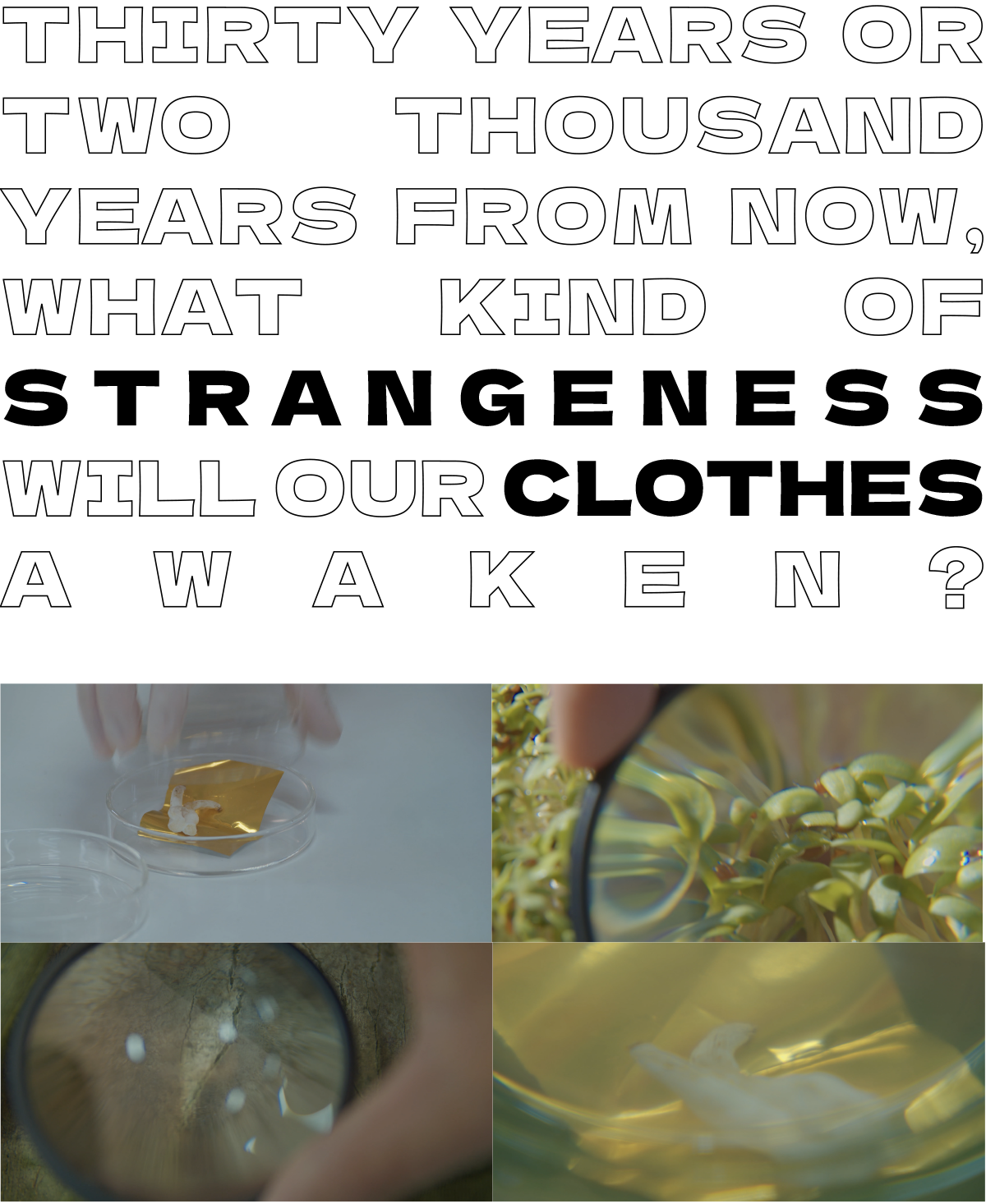
Thirty years or two thousand years from now, what kinds of strangeness will our clothes awaken? Strangeness can also be expressed in the form of prophecy.
Sebastià Portell
2
"The shock of the Anthropocene creates confusion. Nothing is now as we thought it was. What is a human being, what is an object, what is nature? We are living in a state of conceptual instability, of unsayability: we lack the right words to describe the Anthropocene. (...) The problem is that the ruin, debris and dust of our era are not like those of other eras. Their temporality is different, as are the effects of this temporality. Because most of the materials used in pre-industrial societies disappear when buried or exposed to the elements (organic materials) or are basically neutral (the granite of a wall, the clay of a pot). In contrast, radioactive waste remains dangerous for thousands of years – the average life of plutonium-239 is 241 centuries: more than 800 human generation −."
González Ruibal, Alfredo. Sentir el Antropoceno
[catalogue of the exhibition Hiperobjectes o ésser en tremolor, curated by Patricia Marqués].
Barcelona: Can Felipa Arts Visuals, 2022.
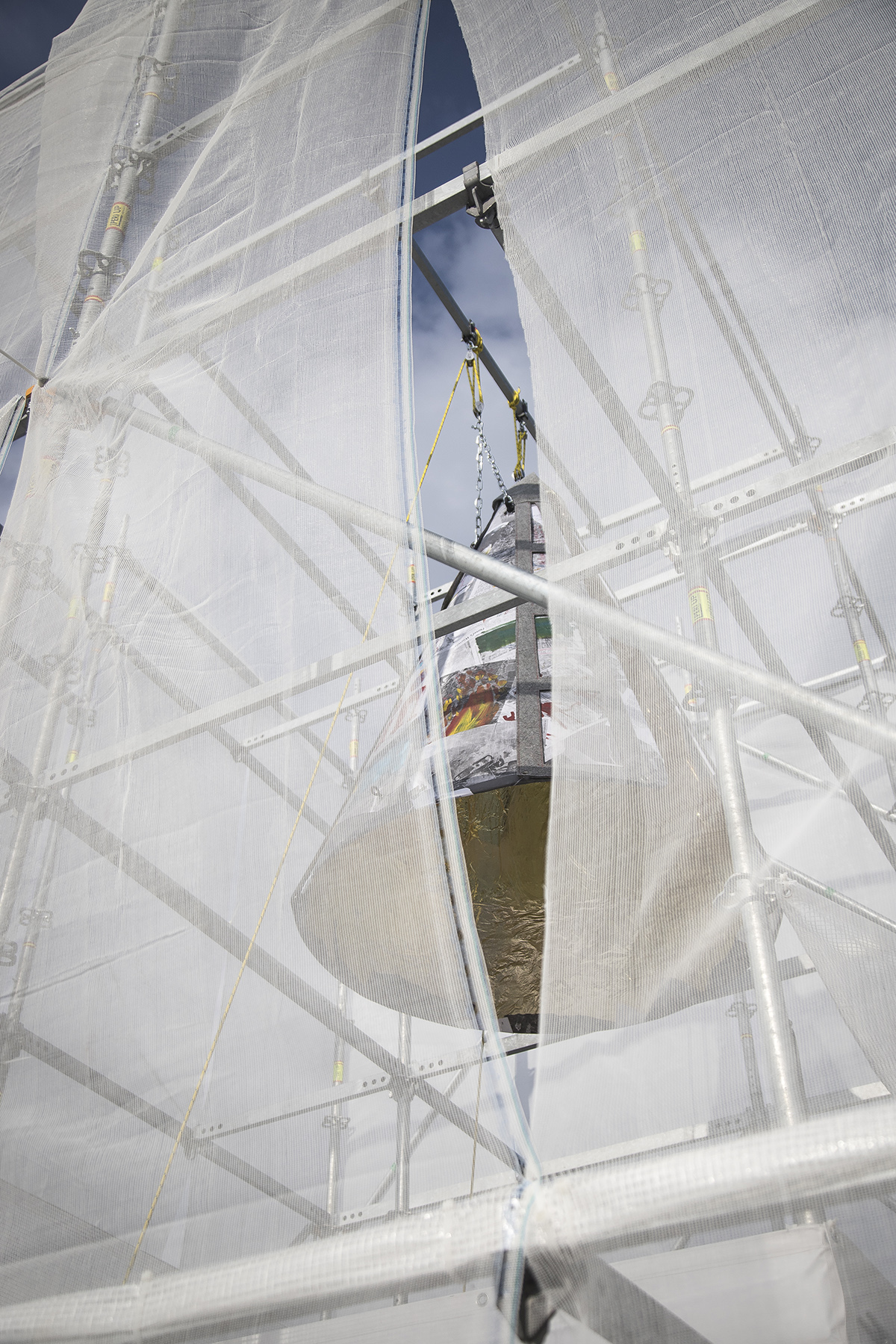
CROP, Meritxell Colell

The concept thas has shaped the 2023 Quadrennial: RARE
Each edition of the Prague Quadrennial of Performance Design and Space is structured around one or more concepts that give a sense of continuity and cohesion to the various creations that participate. They are broad concepts that allow for different approaches and points of view, designed to activate reflection on contemporary scenographic practice. On this occasion, the team of the Artistic Director Markéta Fantová has proposed THE RARE, what is strange, infrequent. This makes perfect sense in the post-pandemic context in which it was formulated, when many theatres were still closed, courses were held online, and the future envisioned by the PQ was uncertain. Meeting again in Prague was the opportunity to share utopias and dystopias through the theatre and scenography of the future based on the specificities of our experiences, cultures and traditions, diverse and particular, unique and perhaps strange in the eyes of others. For each section, there has been specific development of the theme.
"We would like to invite you to share the RARE: art springing out of ideas, materials, artistic approaches, and design practices that connect to the human level from within your environment, with its genius loci and unique situation. In the current state of precarity, uncertainty, and epochal change, we call on performance designers, scenographers, and performance practitioners to use their RARE imagination and creativity to help us envision what the world and theatre could look like in the post-pandemic future. [...] Since we have all been deprived of meeting in the same physical space for quite some time, let’s turn PQ 2023 into the RARE opportunity to move from virtual spaces into specific places offering an in-person experience, in which physicality and materiality of scenography become central: where your senses and predicaments will be taken into account."3
3
Extracted from the official website of the Quadriennal. You can read the full text of the PQ curatorial guidelines by clicking on the following link.
CROP, David Corral
At the Student Exhibition, young creators are invited to talk about RARE Stories of Unique Places. An invitation to review and be inspired by nearby culture to create and share new scenographic experiences that are equally personal and clearly unique.
“We are inviting creative interventions that take inspiration in your local knowledge, your local culture and identity – especially if you believe that your local ideas, materials, artistic approaches connected to communities, and genius loci of your place can bring inspiration to new and visionary works of performance design/scenography. With that intention, we ask participating schools and emerging designers to create an exhibition (or an immersive experience space) based on, or inspired by, the cultural knowledge of a place. We believe that the unique process of transformation of these local sources of imagination into new and RARE works of performance design/scenography will actively contribute to the sharing of stories to others from around the world. We encourage you to create scenographic experiences, based on this local knowledge, in which your performance design fully engages the participating audience’s senses, emotions, and perceptions."
For the Countries and Regions Exhibition the subtitle proposed is: RARE Visions.
“In critical times of uncertainty, precarity, and change – like ours – performance designers, scenographers, and all performance practitioners, in the widest sense of the word, play an especially important role in society: to imagine, visualize, and even create rare visions of the future. These may be of various kinds – inspirational, visionary, or cautionary. It is the unique power of performance design/scenography to immerse one’s mind and body in our possible futures, to give hope, and so become a catalyst for positive change. [...] These RARE future visions, imaginations, and predictions, that bring us together, profoundly touch our hearts, and open up potential for change."
Fragments II: RARE Imagination / RARE Worlds
The Fragments section reaches the second edition, putting the focus of the RARE concept on the ability of the models to generate RARE Imaginations or evoke RARE Worlds through the magic of these objects specific to the scenography that play with scales and small format.
“The only way we can experience performance design/scenography in its true form is through a live performance. After the performance is over, all that’s left are fragments of design work, such as models, plans, drawings of sets, and costumes. Those fragments are pieces that open a small window into its creator’s mind and help us understand the design process that takes place before the production comes to life."