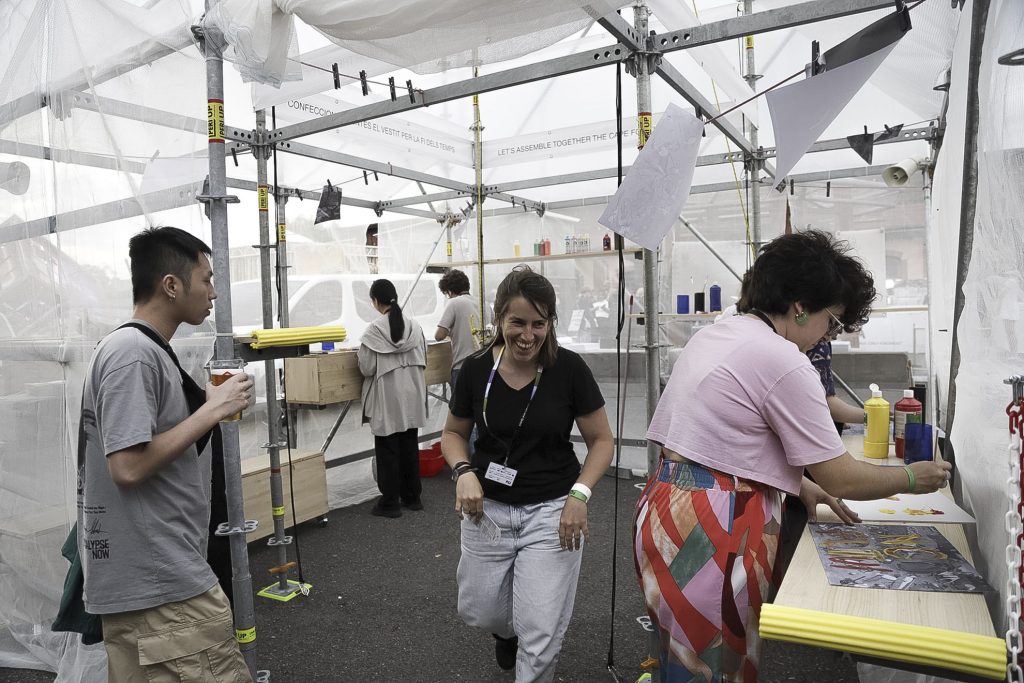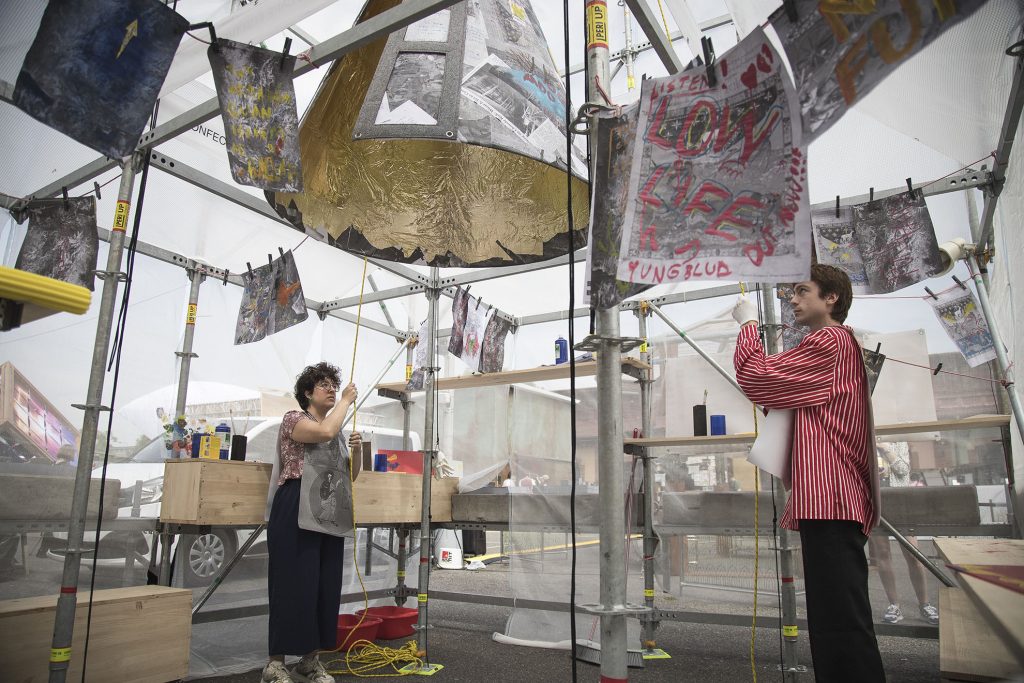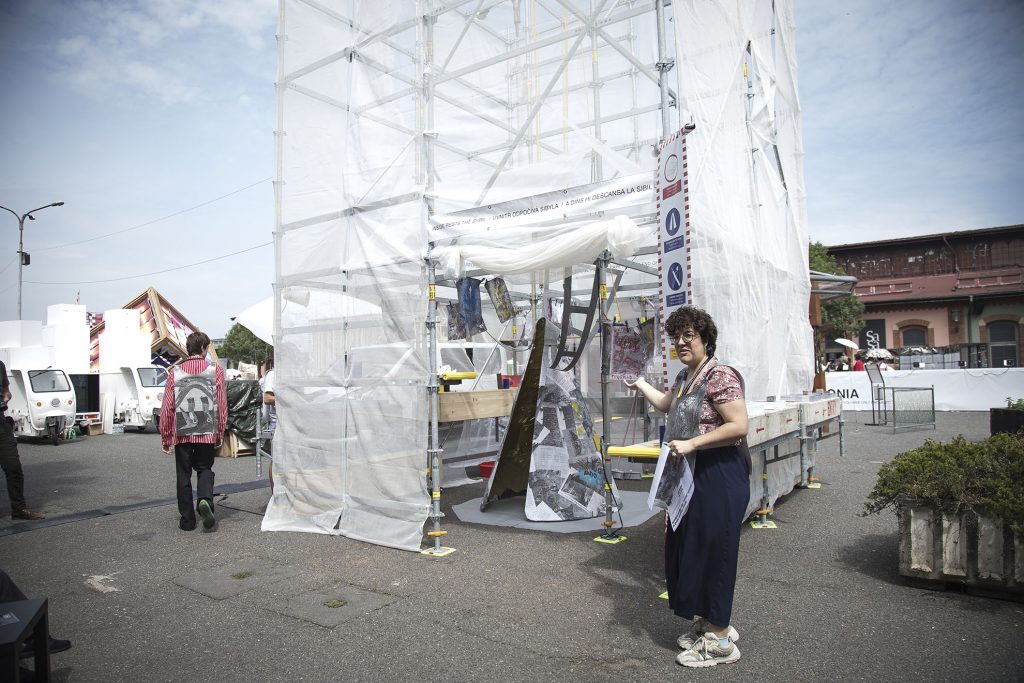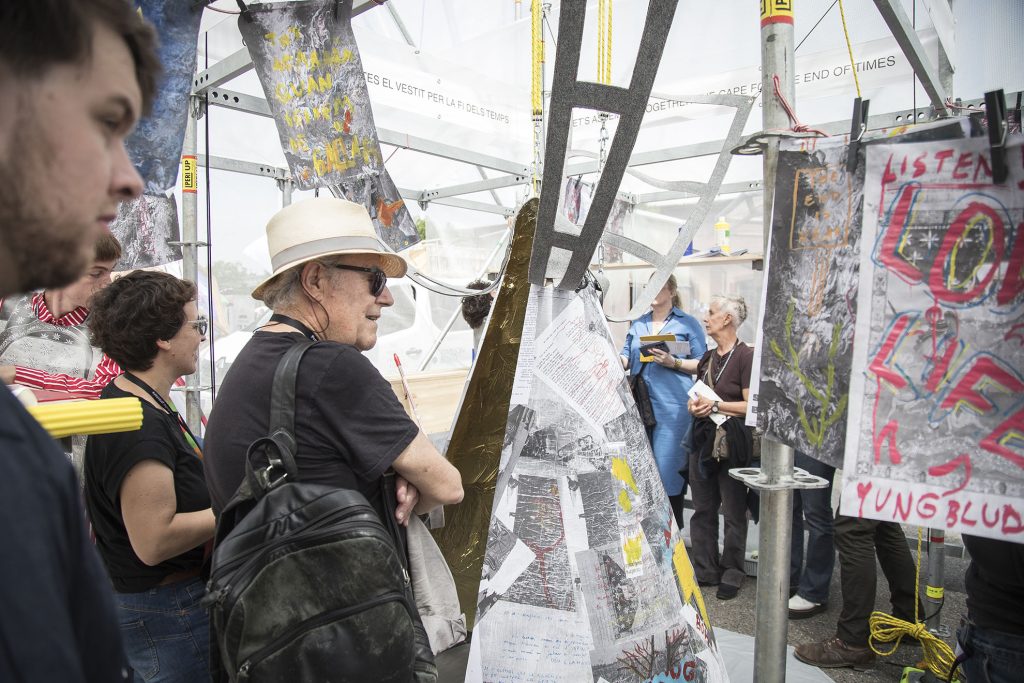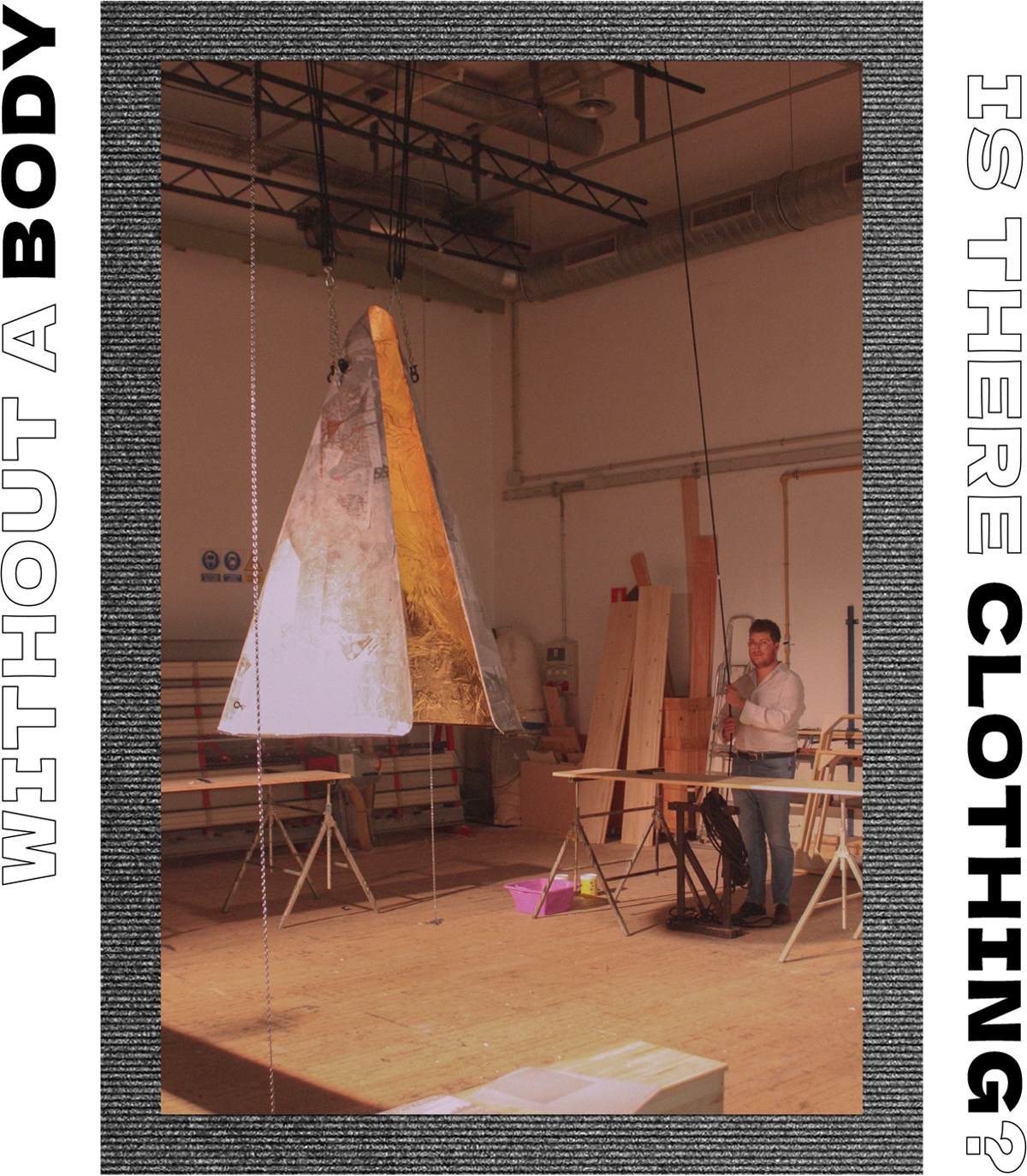
In the midst of the posthumanist era, CROP and The Chant of the Sybil look at the autonomous existence of clothing beyond those who it inhabit it: those who one day wore it proudly on stage, those who made it, those who shaped it through their intervention. Today, however, neither the ritual cloak nor the old stored mouldy items1 have anyone to wear them. Like a discontinuous line drawn with chalk around a body at a crime scene, clothing marks the space where the body – already or rather still – is not.
They swing between elision and absence: what is the awkwardness of having a body?2 Why suppress it?
Sebastià Portell
1
AT CROP THERE ARE:
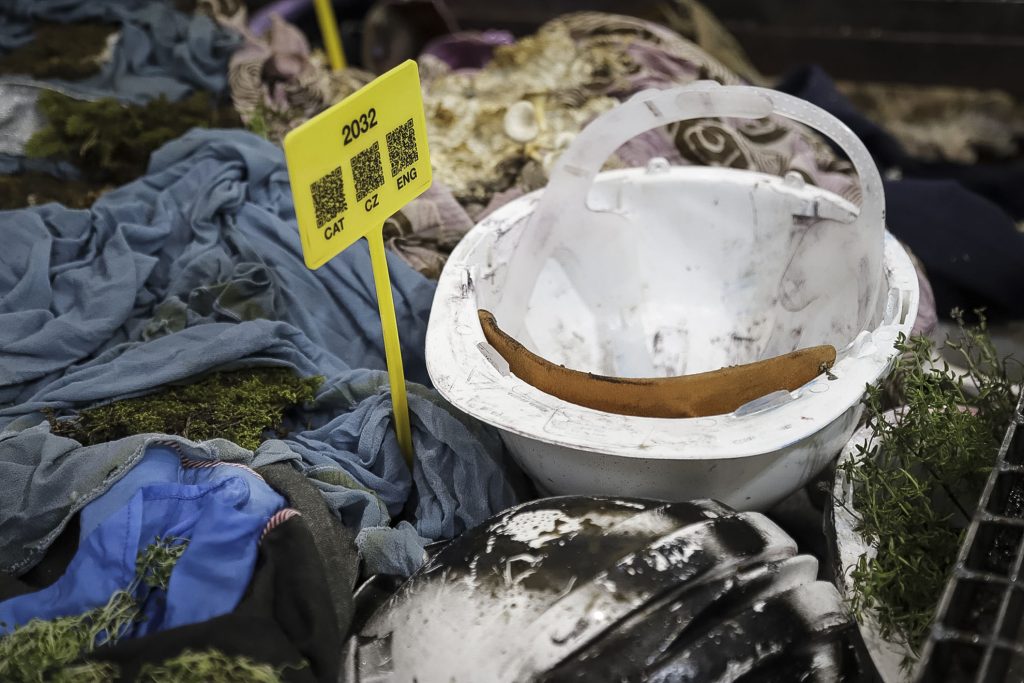
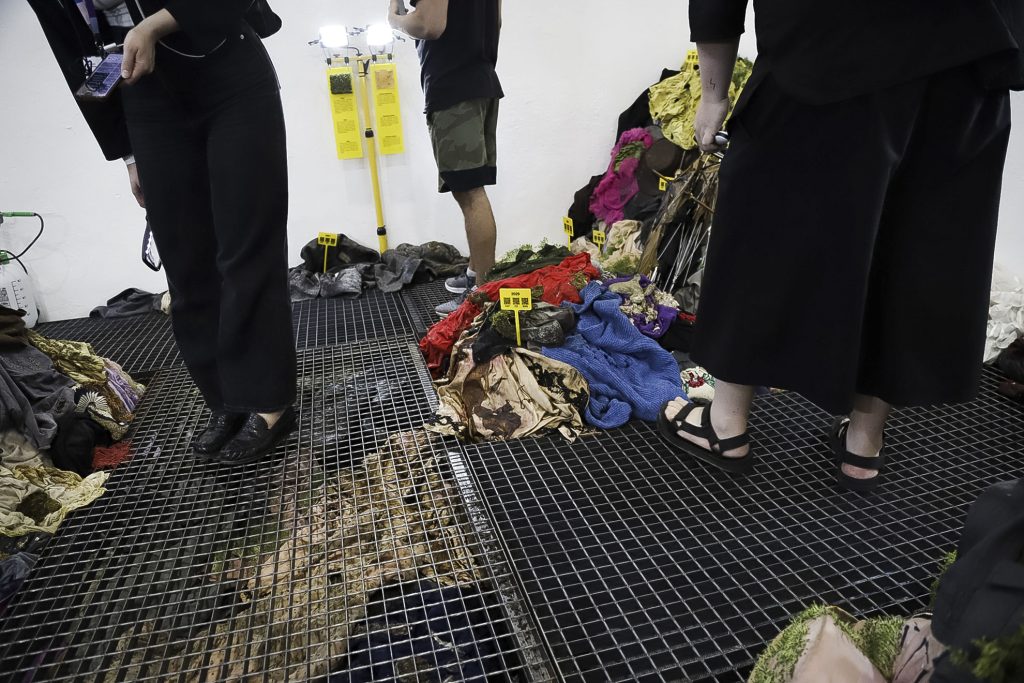
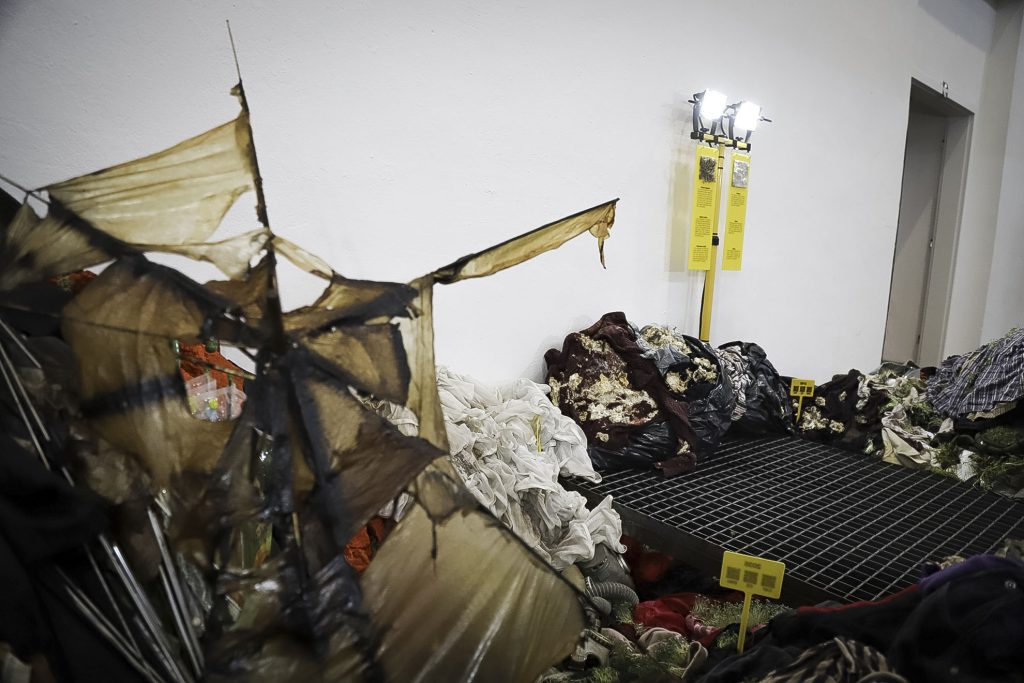
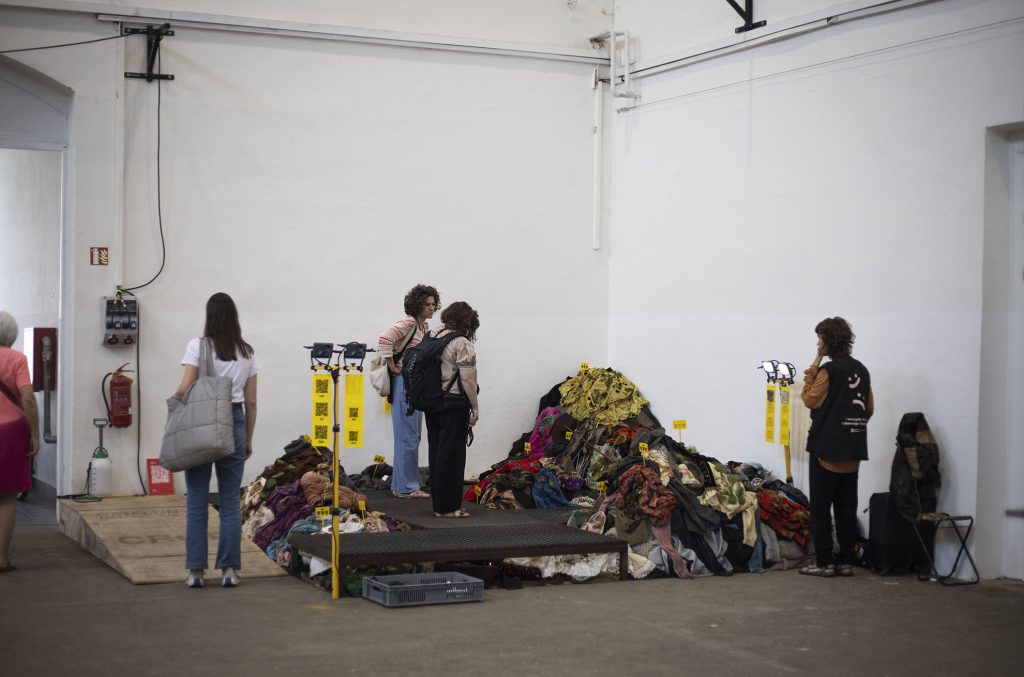
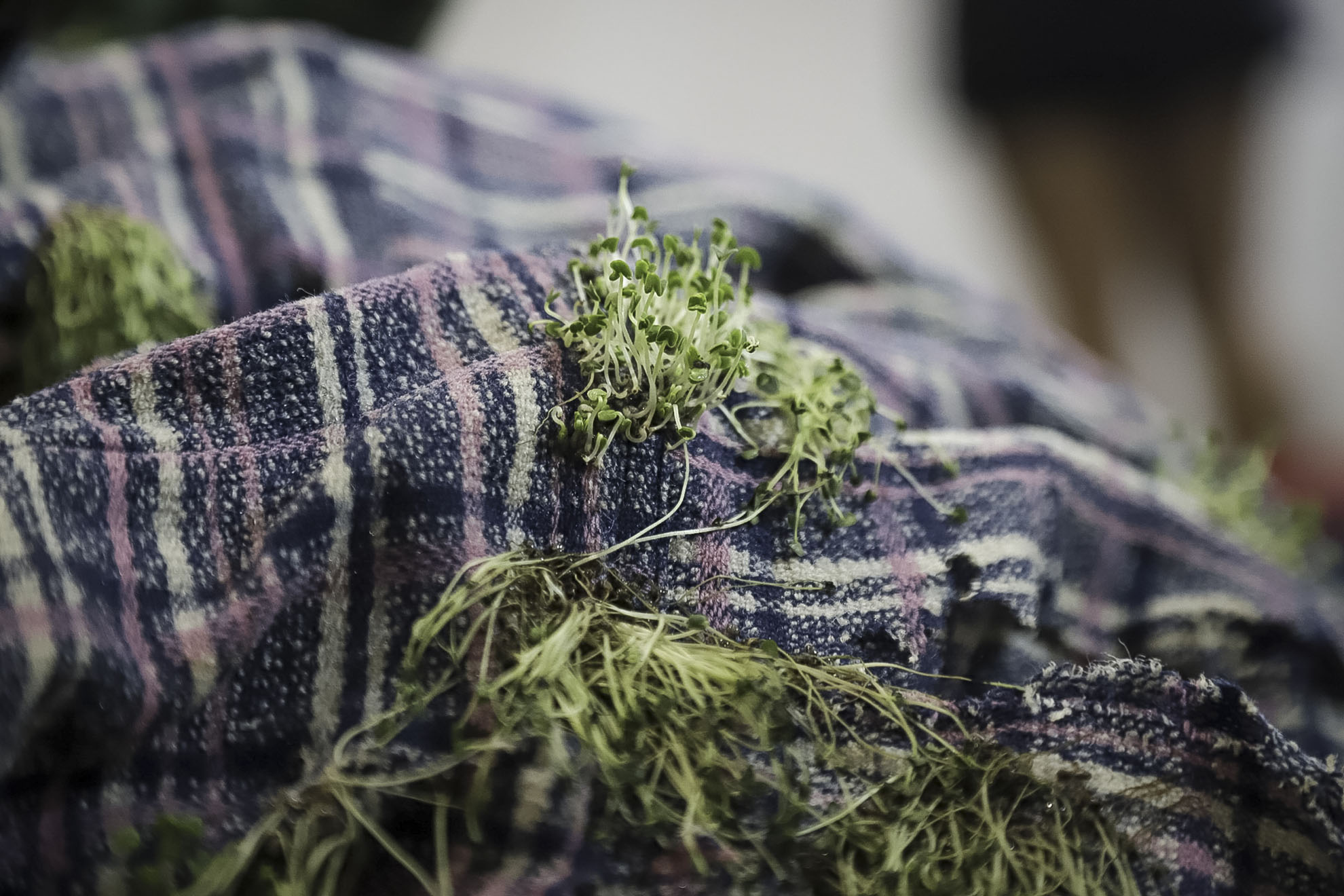
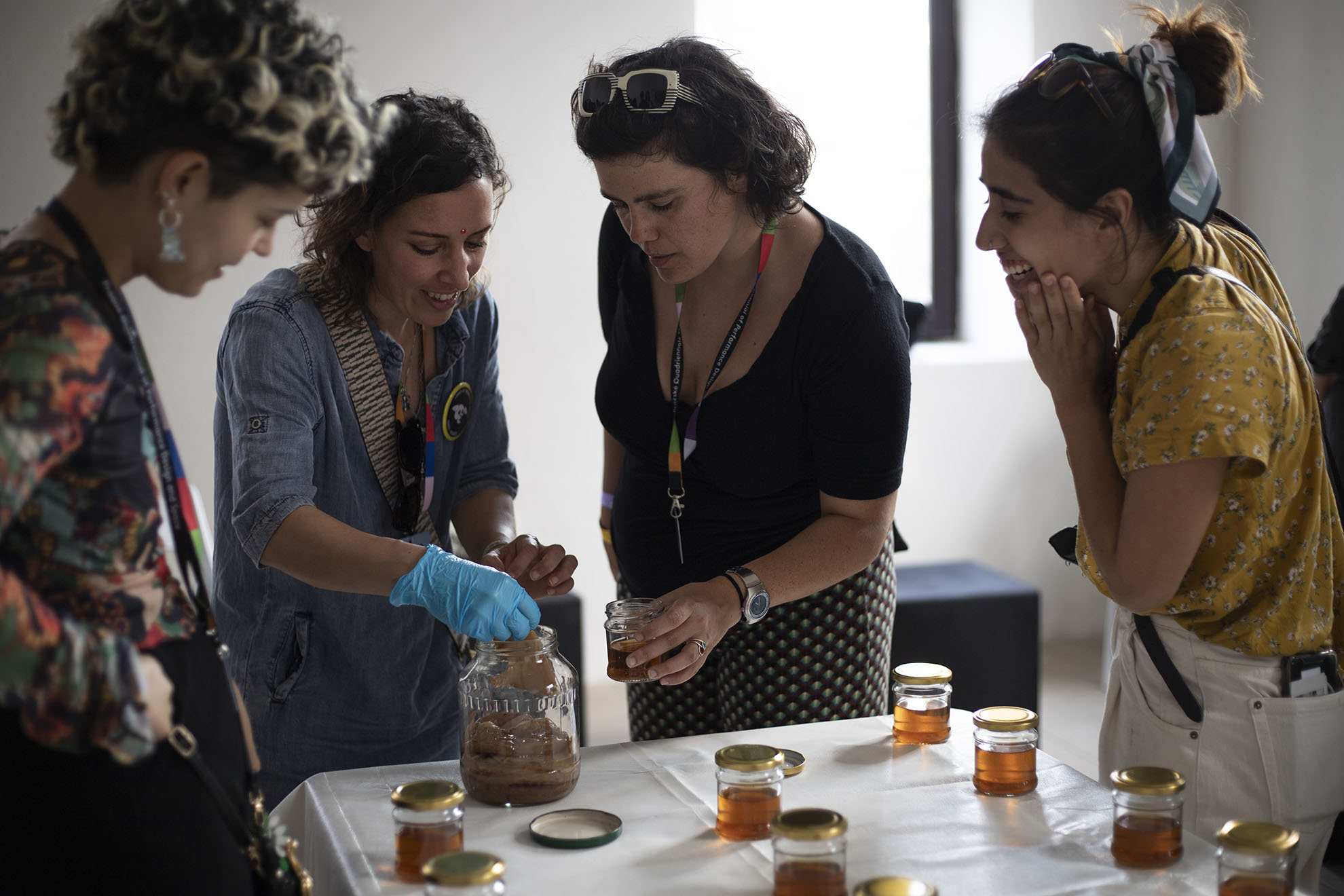
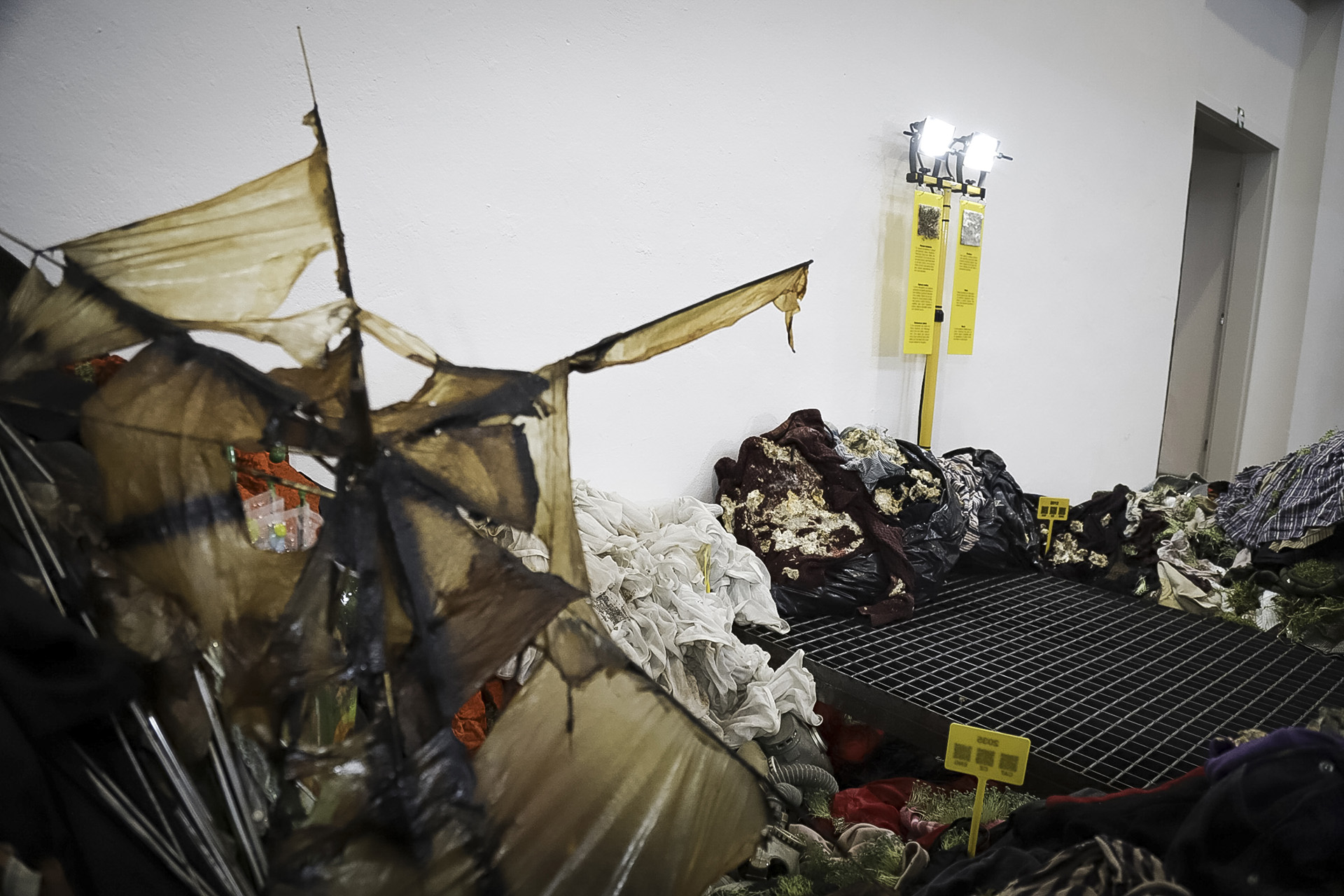
There are pants and shirts, there are two high-heeled shoes that the greenery has engulfed. There is an eight-fingered glove and two worker helmets where thyme grows today: "a plant on the verge of disappearing like the memory of the workers who wore these helmets," says the audio track. There are ties and umbrellas, polyester pieces for protection against insects. There are small colonies of mycelium. There are reflective glasses, classic-style suits, hats, gas masks, children's clothing, boxing gloves. There are fungi.
2
I have no words to describe
The violence of such a naked body
Under the clothes. I imagine
Frida Kahlo and Carol Rama
Penetrating each other. The beauty
Of a pneumatic, orthopaedic,
Erection, ripping
The filthiness between your buttocks:
Filthiness of having a name,
Filthiness of having skin,
Filthiness of a womb capsizing
With all the children you will not have.
But I
Have no words to describe to myself
The shame of such a naked body
Under the clothes and I can only
Look at it through the keyhole.
I imagine your presence
Piercing me. The beauty
Of a pneumatic, orthopaedic,
Erection, ripping
The filthiness between my buttocks:
Filthiness of having a name,
Filthiness of having skin,
Filthiness of a womb capsizing
With all the children I will not have.
Because I have no words to describe
The horror of being my guard
Within my clothes.
Sevilla, Maria. Kalàixnikov.
Manacor: Món de Llibres, 2017.
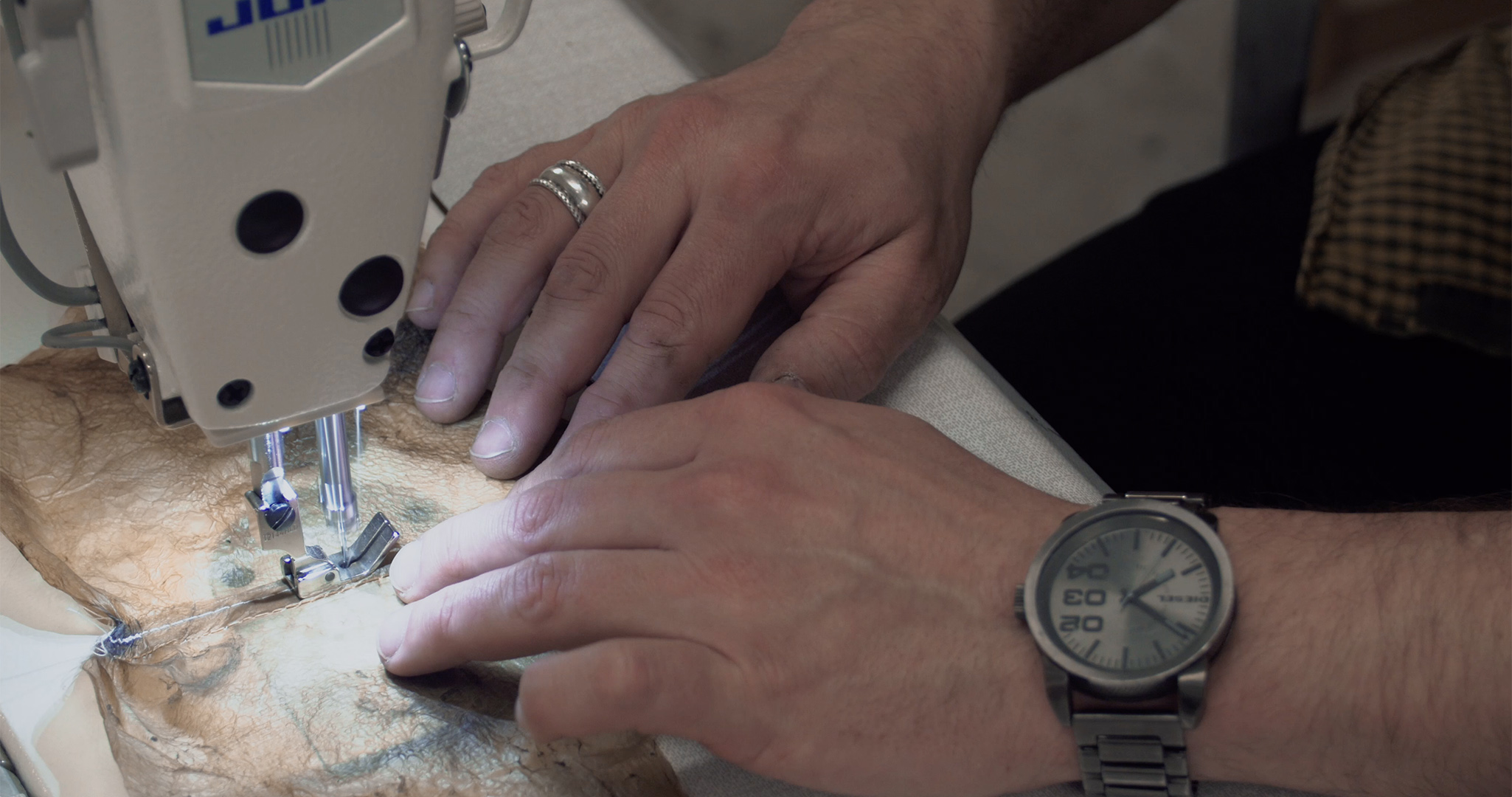
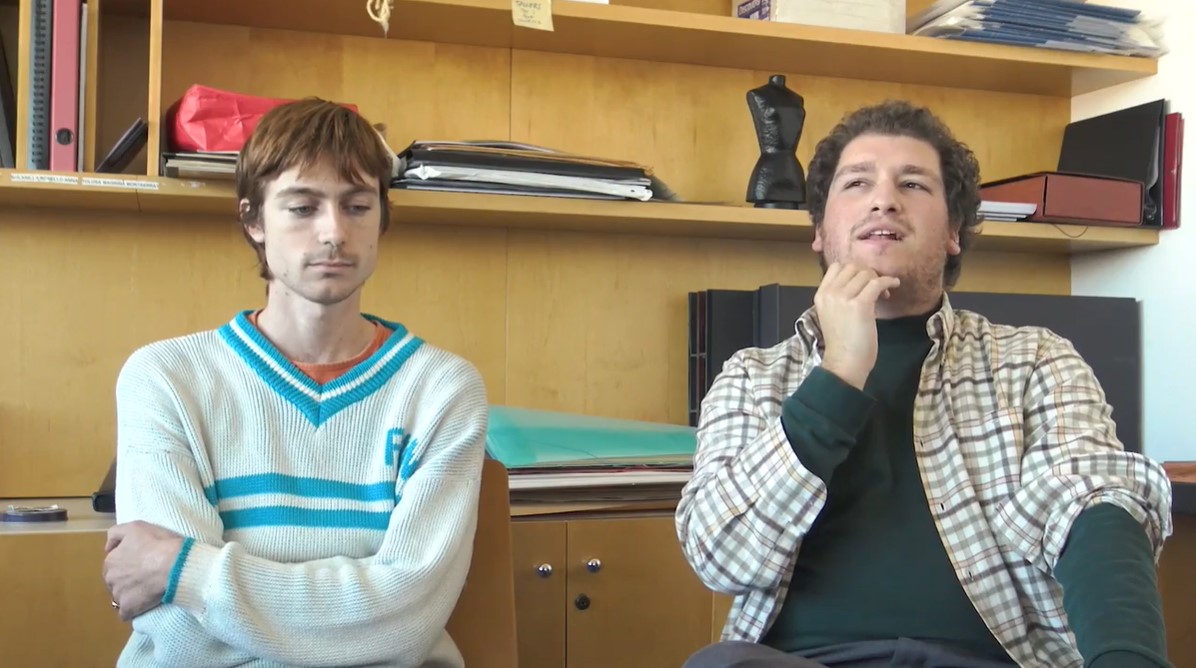
1' 15'' — Raquel Cors, generating life on fabrics.
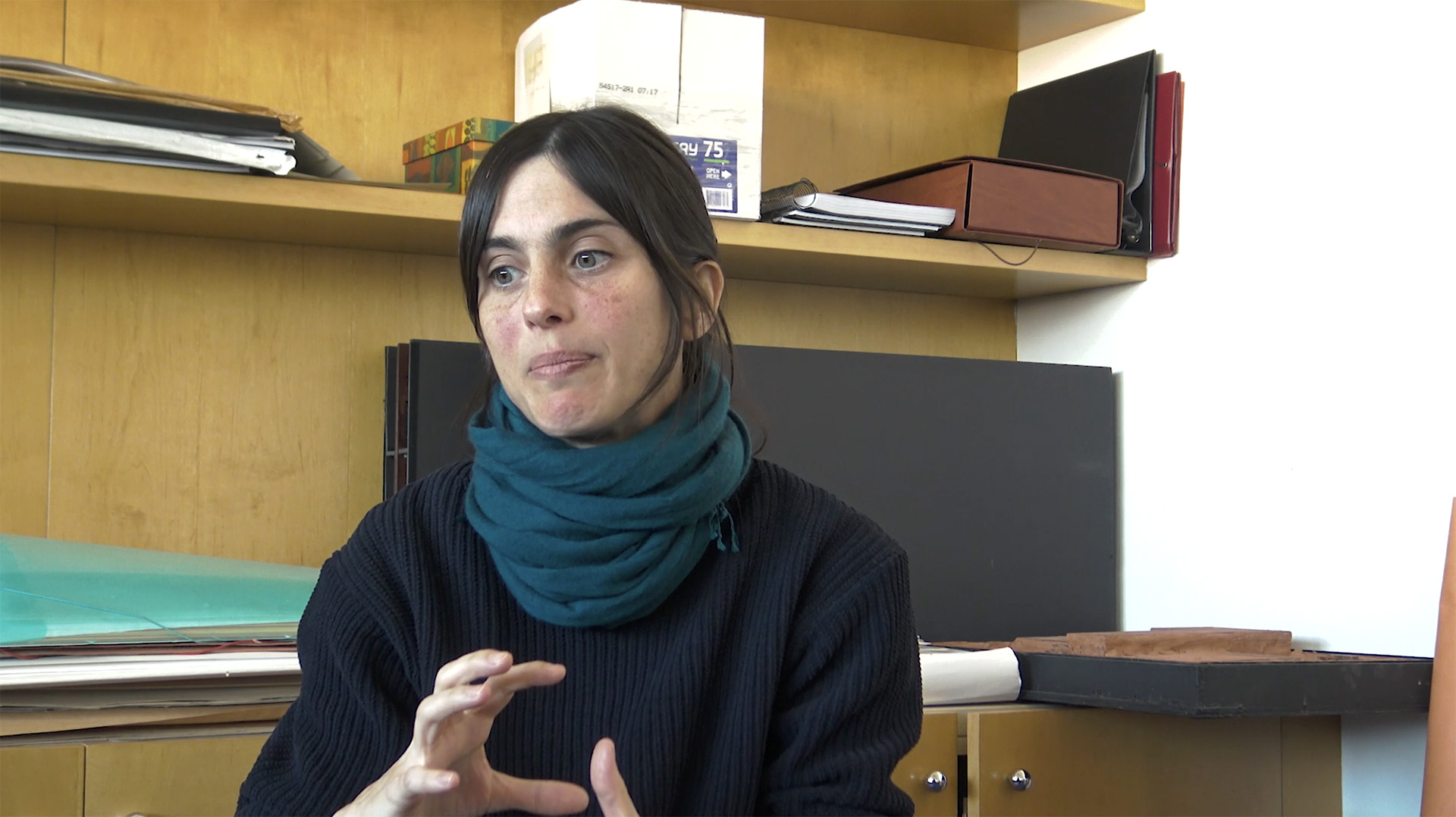
2' 29'' — Sara de Ubieta, collaborator of CROP.
Curatorial lines
«Costume, that ‘thing’ that takes a shape of a human body, that ‘thing’ that mimics and expresses and hides human behavior and character [...]. Always between materiality and behavior, between made and found, protecting and revealing… always in between human and non-human.»3
Christina Lindgren & Sodja Lotker
The costume as a starting point for our projects.
Imagine what happens if we put the costume at the centre.
The costume can be the story.
Or the trigger of the action, the vehicle of the experience.
Fully exploit its dramatic potential.4
The costume is not only a garment.
The costume is everything that emerges from the body’s relationship with the garment.
From the body, the garment and the context.
From the body, the garment, the context and the action.
From the body, the garment, the context, the action and the audience.
What happens when one of these concepts appears deliberately?
Explore the limits.
Explore the limits with the costume as centre Without losing its visual qualities.5
3
4
Activate
Transport
Provoke
Reflect
Identify
Be a reference
5
It’s volume.
It’s form.
It’s texture.
It’s colour.
It’s movement.
It’s full.
It’s empty.
It’s space.
It’s time.
It’s composition.
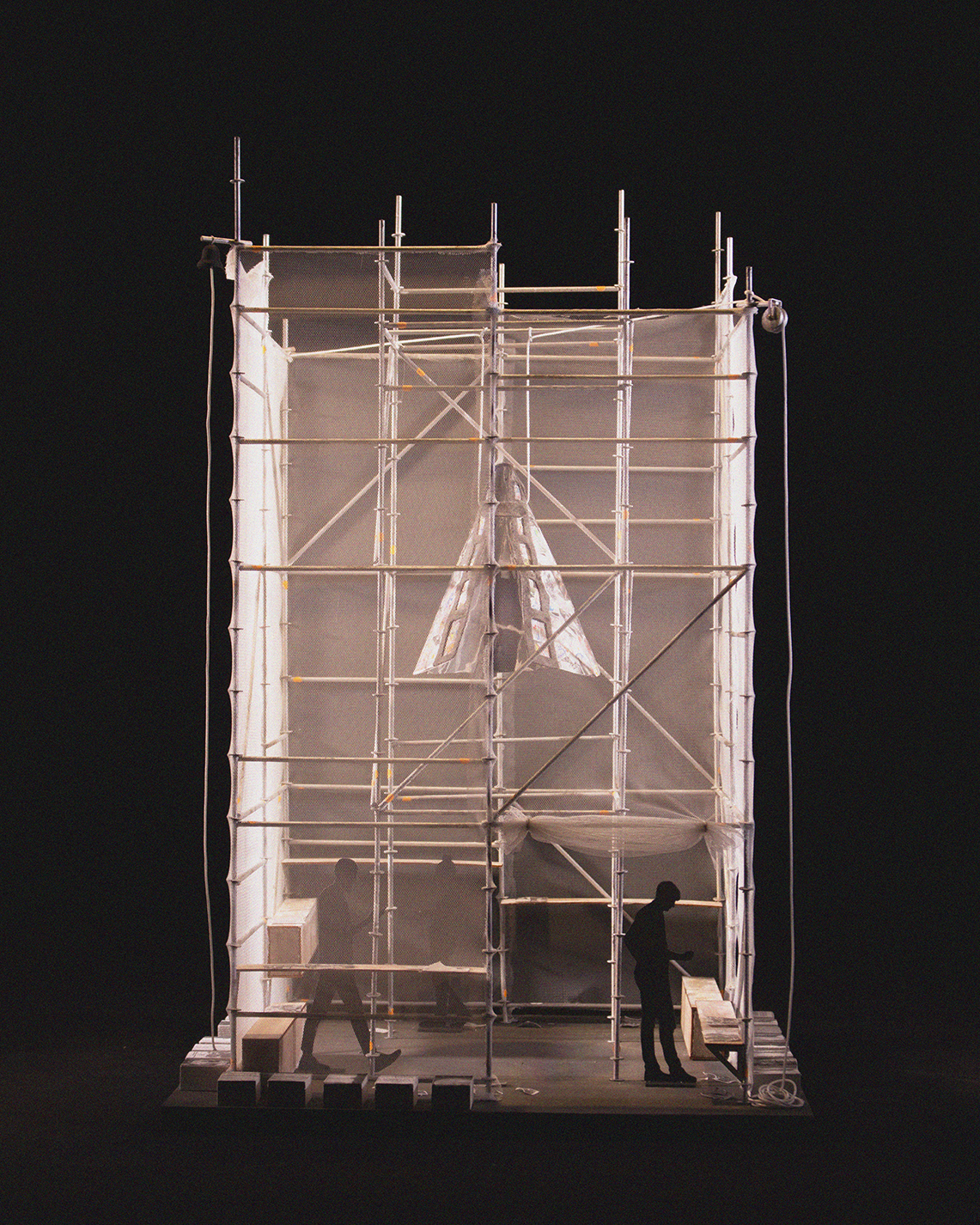
The creative teams have made the bodies disappear.
With the absence of the body, the clothing has become context.
The vacuum has been filled with memory.
The vacuum is full of possibilities of other lives, other inhabitants.
The vacuum that leaves the body talks to us of the past, and also the future.
Without the original context, clothing is waste.
And waste can be archaeology, history, story.
The costume is landscape and ideology.
The creative teams have made clothing into form and content.
They have given it the possibility of being continent and content.
Of being fiction and reality.
Being the message.
Being the language.
Remains and supposition.
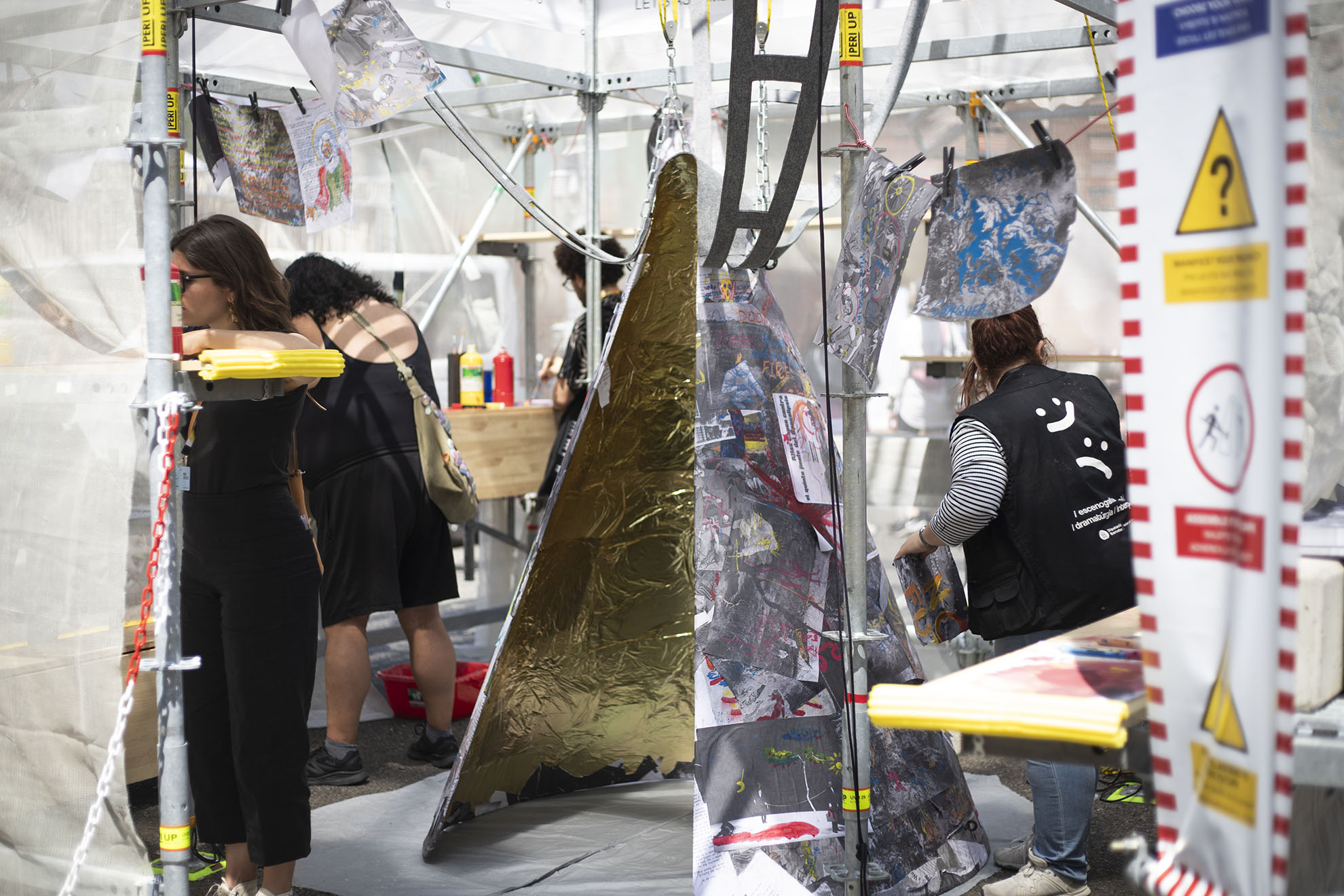
With bodies expelled from the stage, the audience is responsible for the action.
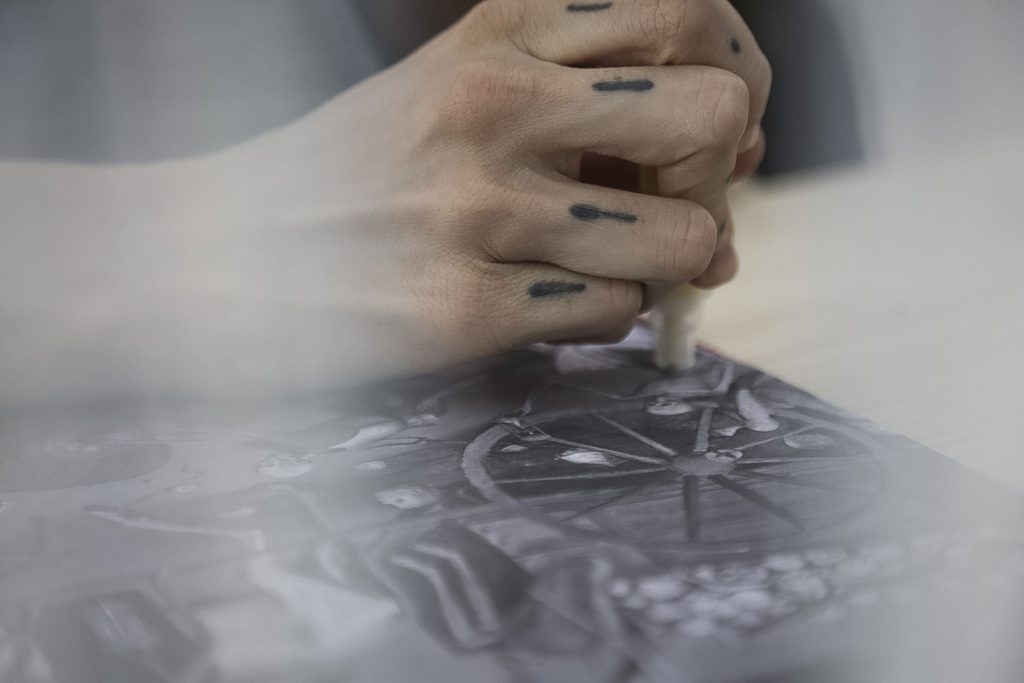
Observing, listening, drawing, handling, circulating,
becoming, at the same time, both the protagonist and spectator of the experience.
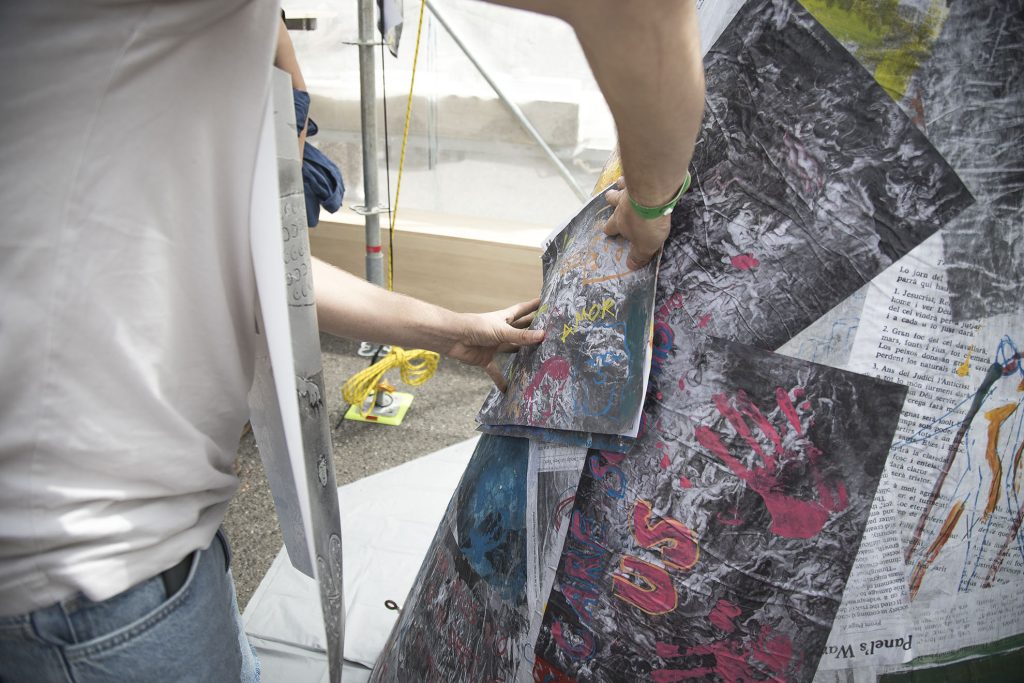
Photography by Mireia Sintes
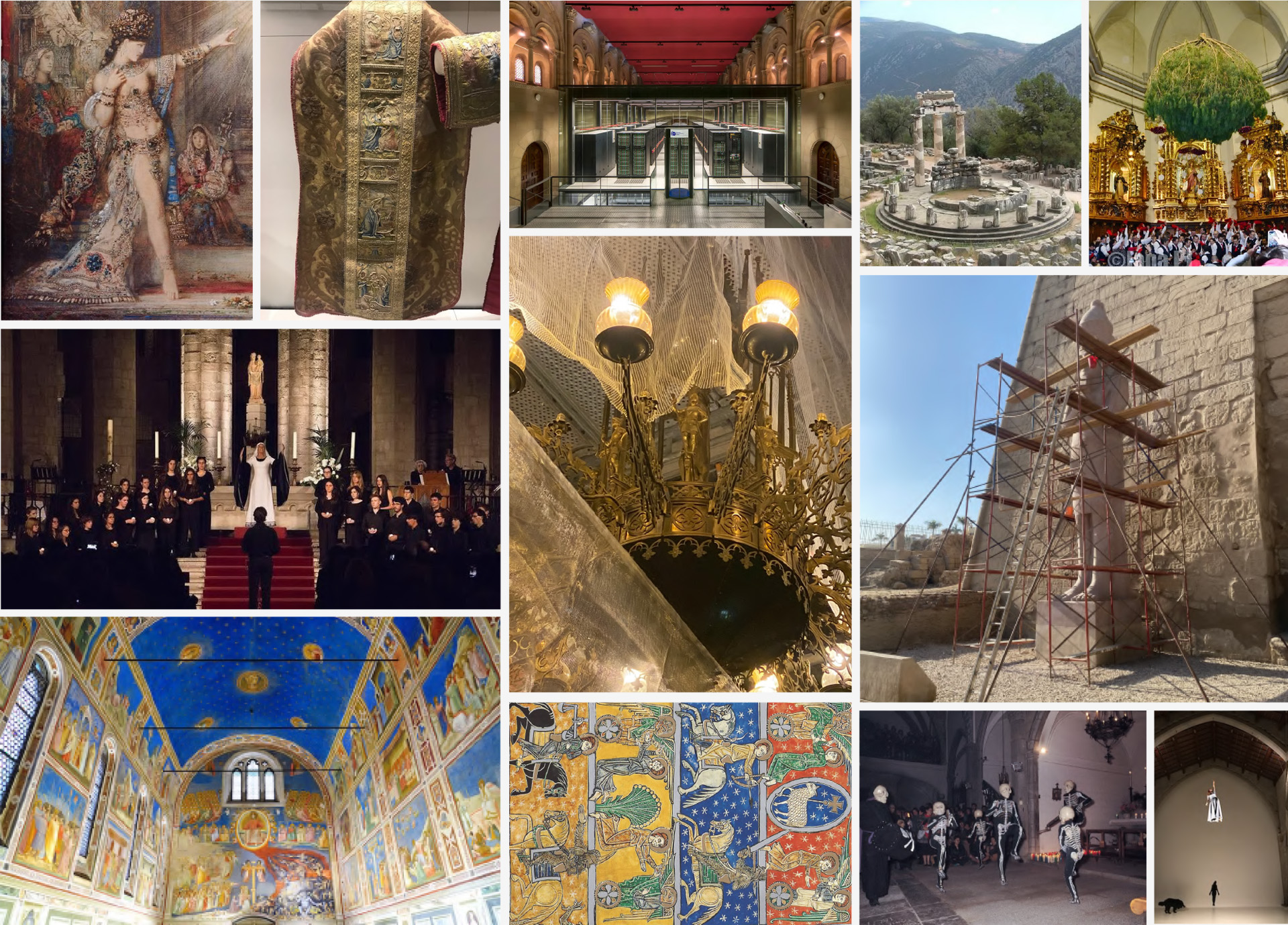
1' 26'' — Sources of inspiration for the student team.
In the midst of the posthumanist era, CROP and The Chant of the Sybil look at the autonomous existence of clothing beyond those who it inhabit it: those who one day wore it proudly on stage, those who made it, those who shaped it through their intervention. Today, however, neither the ritual cloak nor the old stored mouldy items1 have anyone to wear them. Like a discontinuous line drawn with chalk around a body at a crime scene, clothing marks the space where the body – already or rather still – is not.
They swing between elision and absence: what is the awkwardness of having a body?2 Why suppress it?
Sebastià Portell
CROP, Meritxell Colell
1
AT CROP THERE ARE:
There are pants and shirts, there are two high-heeled shoes that the greenery has engulfed. There is an eight-fingered glove and two worker helmets where thyme grows today: "a plant on the verge of disappearing like the memory of the workers who wore these helmets," says the audio track. There are ties and umbrellas, polyester pieces for protection against insects. There are small colonies of mycelium. There are reflective glasses, classic-style suits, hats, gas masks, children's clothing, boxing gloves. There are fungi.
2
I have no words to describe
The violence of such a naked body
Under the clothes. I imagine
Frida Kahlo and Carol Rama
Penetrating each other. The beauty
Of a pneumatic, orthopaedic,
Erection, ripping
The filthiness between your buttocks:
Filthiness of having a name,
Filthiness of having skin,
Filthiness of a womb capsizing
With all the children you will not have.
But I
Have no words to describe to myself
The shame of such a naked body
Under the clothes and I can only
Look at it through the keyhole.
I imagine your presence
Piercing me. The beauty
Of a pneumatic, orthopaedic,
Erection, ripping
The filthiness between my buttocks:
Filthiness of having a name,
Filthiness of having skin,
Filthiness of a womb capsizing
With all the children I will not have.
Because I have no words to describe
The horror of being my guard
Within my clothes.
Sevilla, Maria. Kalàixnikov.
Manacor: Món de Llibres, 2017.
1' 15'' — Raquel Cors, generating life on fabrics.
2' 29'' — Sara de Ubieta, collaborator of CROP.
Curatorial lines
«Costume, that ‘thing’ that takes a shape of a human body, that ‘thing’ that mimics and expresses and hides human behavior and character [...]. Always between materiality and behavior, between made and found, protecting and revealing… always in between human and non-human.»3
Christina Lindgren & Sodja Lotker
The costume as a starting point for our projects.
Imagine what happens if we put the costume at the centre.
The costume can be the story.
Or the trigger of the action, the vehicle of the experience.
Fully exploit its dramatic potential.4
The costume is not only a garment.
The costume is everything that emerges from the body’s relationship with the garment.
From the body, the garment and the context.
From the body, the garment, the context and the action.
From the body, the garment, the context, the action and the audience.
What happens when one of these concepts appears deliberately?
Explore the limits.
Explore the limits with the costume as centre Without losing its visual qualities.5
The creative teams have made the bodies disappear.
With the absence of the body, the clothing has become context.
The vacuum has been filled with memory.
The vacuum is full of possibilities of other lives, other inhabitants.
The vacuum that leaves the body talks to us of the past, and also the future.
Without the original context, clothing is waste.
And waste can be archaeology, history, story.
The costume is landscape and ideology.
The creative teams have made clothing into form and content.
They have given it the possibility of being continent and content.
Of being fiction and reality.
Being the message.
Being the language.
Remains and supposition.
With bodies expelled from the stage, the audience is responsible for the action.
Observing, listening, drawing, handling, circulating,
becoming, at the same time, both the protagonist and spectator of the experience.
3
4
Activate
Transport
Provoke
Reflect
Identify
Be a reference
5
It’s volume.
It’s form.
It’s texture.
It’s colour.
It’s movement.
It’s full.
It’s empty.
It’s space.
It’s time.
It’s composition.
Photography by Mireia Sintes
1' 26'' — Sources of inspiration of the students team.