The web archive
Live art cannot be preserved, but from the outset we, as curators of this project, have felt the conviction and responsibility to do so. The human and creative team involved in participating in the Prague Quadrennial is very extensive and has worked for almost three years. Everything produced during this time, along with the experience of the ten days of the festival, had to be brought together in some way.
The paradox of wanting to capture what is ephemeral is somewhat romantic but is not a chimera – call us daring. For us, it was not about preserving the works themselves, but everything around them, what they have left behind. This is what drives this web archive, the desire to generate and gather thoughts, images and accounts that make the intangible visible, making it available to others – to you, who are reading– to be able to re-view, re-think, re-memorise or re-use. It was born to give virtual and playful continuity to the unique experience that was the Catalan PQ23 project.
Contemporary archiving has been an ideal framework to explain our project, since it does not understand the archive in a static manner, but finds part of its potential in fragmentation and does not necessarily imply a temporality or a linear reading. If we wanted our installations and actions to respond to two basic questions – that they were interactive experiences for visitors and that they challenged them, giving them space for reflexion – we would not have been consistent in creating a website that built a collective memory with a unique and guided reading.
"Falling snow is perhaps the purest manifestation of uncontrollabillity. We cannot manufacture it, force it, or even confidently predict it, at least not very far in advance. What is more, we cannot get hold of it or make it our own. Take some in your hand, it slips between your fingers. Bring it into the house, it melts away. Pack it away in the freezer, it stops being snow."
Hartmut Rosa
Our archive is a combination of materials that do not seek to justify or describe what happened. Thus, it is presented through six concepts that have been fundamental and central to the presence of Catalonia in the PQ23, but we do not want to impose an order or a hierarchy. Future, strangeness, clothing, memory, experience, trace and Catalonia. Getting lost in each of them means discovering fragments and traces of the three projects that offer visitors an active and personal experience, allowing them to be carried away by a random surf or plotting a personal story made up of their interests and their omissions. It will always be a partial story, like memory, made up of intersections, juxtapositions and simultaneities that dismantle the fiction of the time and narrative linearity. Paths through the archive can be endless just like the experiences of the installations in Prague.
The archive is, for us, a collective creation, the voice of many voices. It brings together materials of diverse nature as well as gazes, from inside and outside. In addition to the voices of the design teams and the curators, there is the voice of four creators from diverse worlds such as the audiovisual creation, the graphic expression or literature. We have invited them to join us and explore our journey to enrich it and provide it with unique approaches. Sebastià Portell has activated the words, Raimon Rius has played with stroke, and Meritxell Colell and Elena Molina with the audiovisual image. The students Helena Mateos, David Corral and Joan Martínez from the Escola Superior d’Art Dramàtic (ESAD) at the Institut del Teatre have also contributed their perspectives. All of them make possible this kaleidoscope full of resonances and layers.
Finally, the archive also has to do with care, with the desire to value and protect, not only the work and the documents but the artist who created them. It is a way of recovering time that was private, for some, so that it belongs to the community and has a social and historical significance.
Catalunya at PQ23
The Institut del Teatre has participated for the eighth time in the Prague Quadrennial of Performance Design and Space1 driven by the capacity of this well-established international event as a platform for meeting and reflecting on the visual aspects of scenography, from a contemporary, diverse and practical perspective.
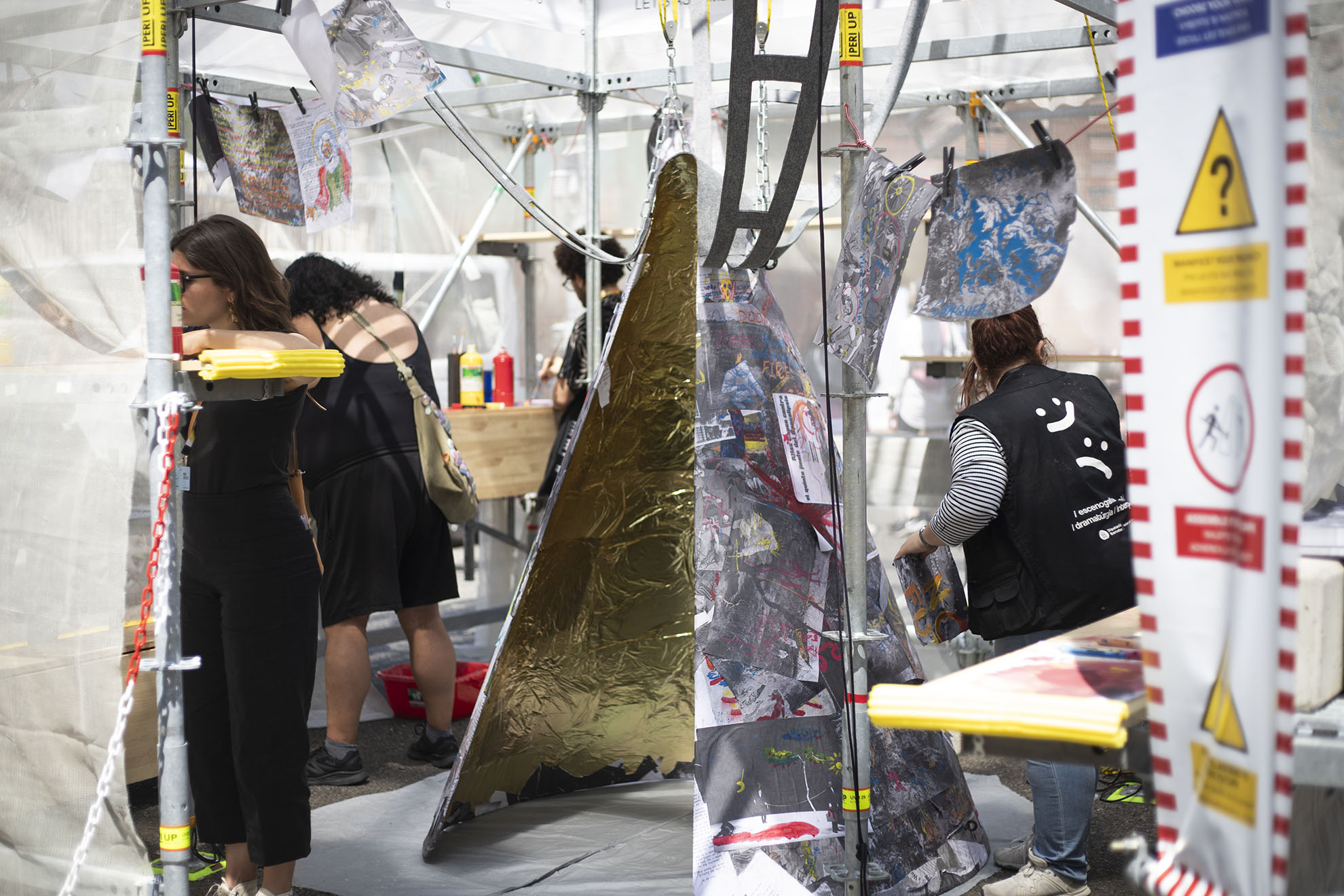
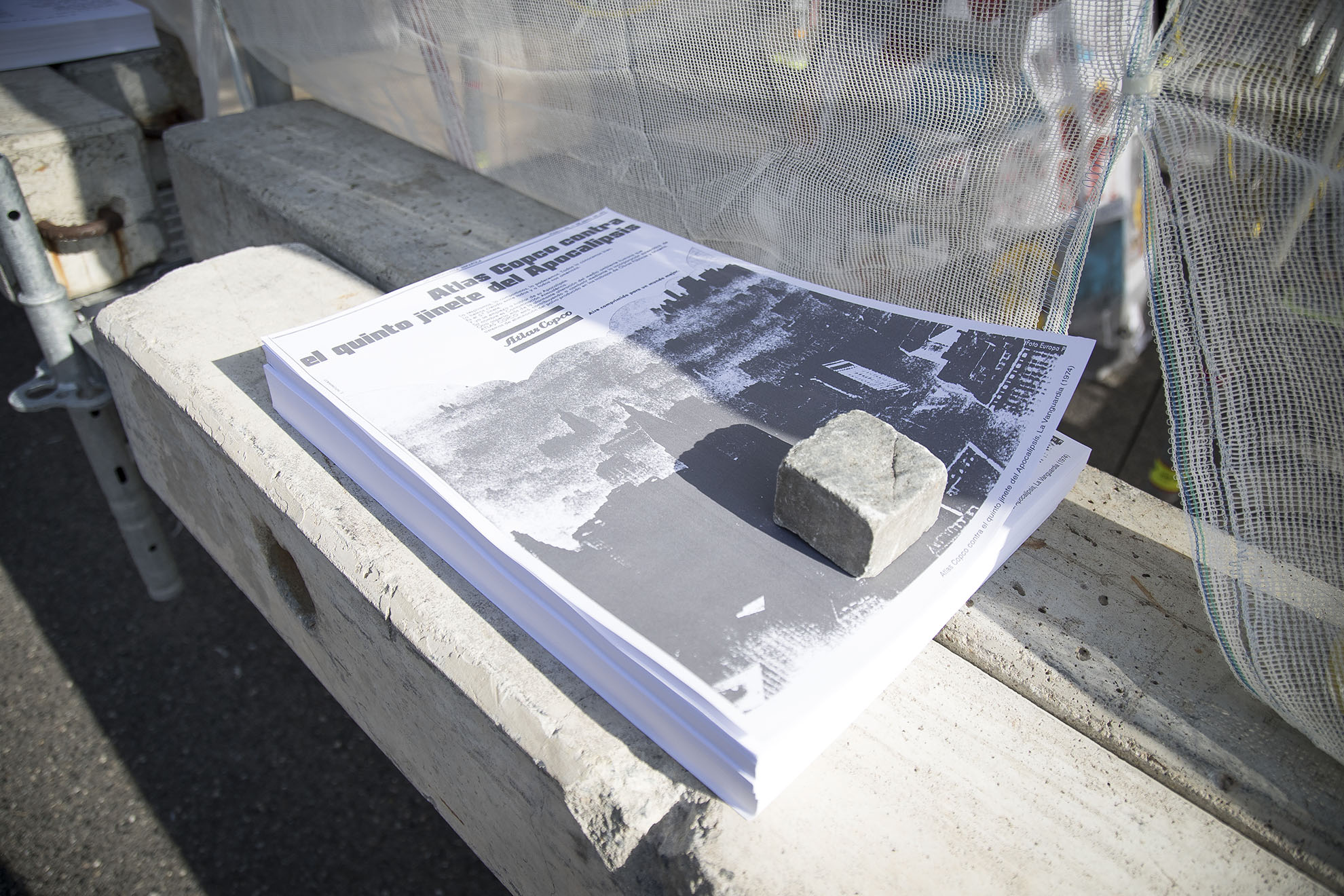
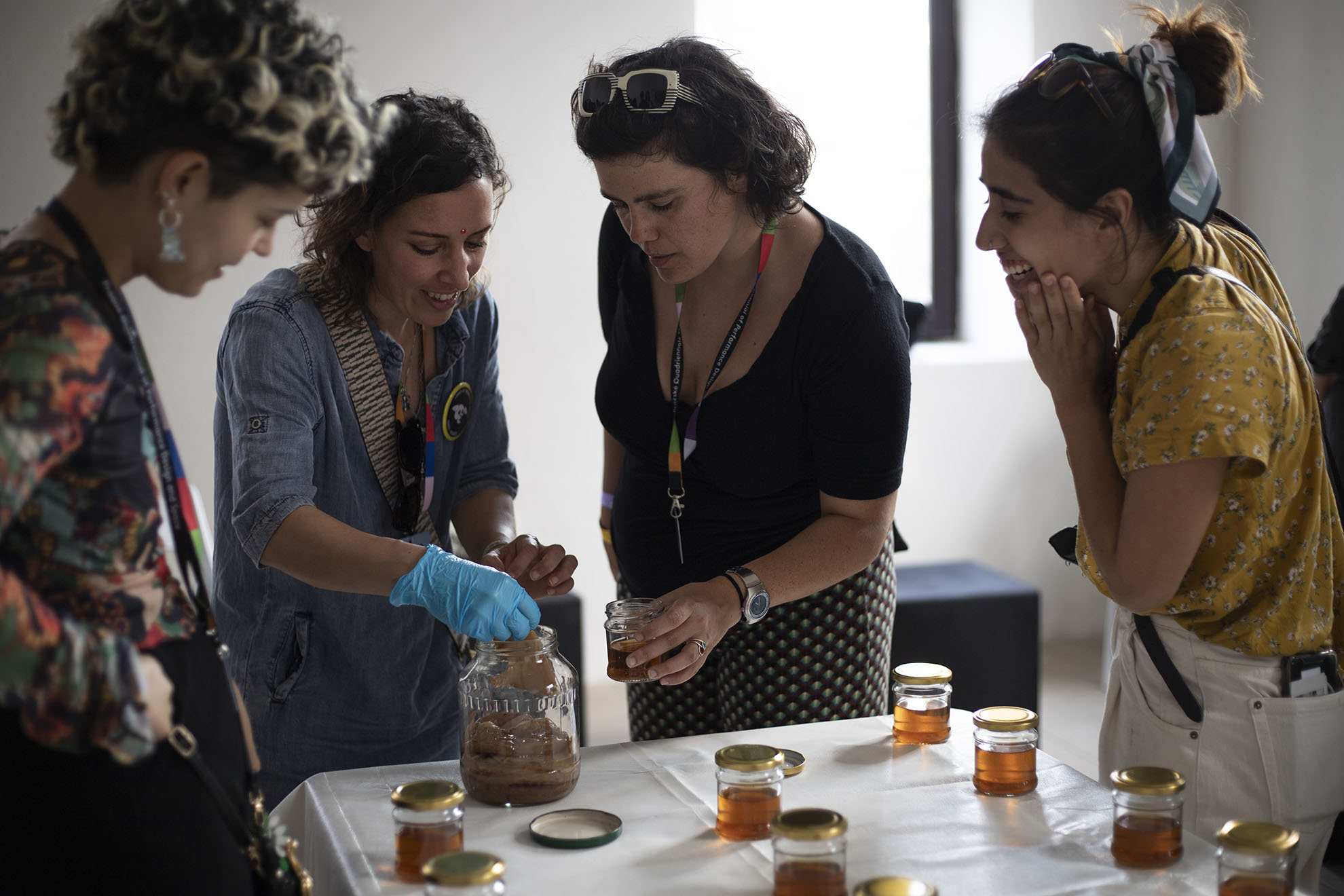
Once again, in 2023 CATALONIA has shown its scenographic and theatrical potential by bringing to Prague pieces by new and established creators and also performing arts students. They have also had the opportunity to meet and forge connections with the other participants, their interests and their practice. In this fifteenth edition, the Catalan presence has focused on participating in the two major exhibitions, Countries and Regions Exhibition (CRE) and Students Exhibition (SE), and in the section Fragments II, the latter featuring theatre models. The installations presented were complemented by guided visits and two workshops related to the installation Crop, which represented Catalonia in the CRE.
Moreover, the Institut del Teatre has asserted its value as a centre for training, creation, research, documentation and dissemination of the performing arts in Catalonia, and the Institut Ramon Llull as a leading institution which sheds light on the country's artistic potential.
1
In the field of the PQ the terms performance design and scenography are used indistinctly to refer to all the aspects of stage design, including the space, costumes, lighting, sound and theatre architecture itself. In this document, we will use scenography in the same way the term.
CURATORIAL PROJECT
Usually, the general curatorship team of the contest provides all the participants with a broad main theme that structures most of the sections and activates reflection on scenographic practice in relation to the contemporary context. In parallel, the curators of Catalonia worked with specific lines of interest to substantiate and make the projects presented more specific.
Historically, international exhibition events have provided the ideal setting for participants to display their already existing scenographic design projects or to present major names from the country; recognised creations that show what its professionals and students know how to do best, ensure success and TRACE the artistic tradition of the country. Catalonia has sought an approach different from past editions, putting the potential of its professionals at the core and with a new creation project specifically designed for PQ23.
In general terms, we could say that the field of scenography in Catalonia has little experience in research. Despite having demonstrated a high creative capacity for innovation, the performing arts sector is small, centralised and with budgets that do not allow an exploration of the visual aspect related to theatrical creation, since very often this requires time and a major technical and production investment for it to be developed. The resources and infrastructure provided by the leadership of the Institut del Teatre and the Institut Ramon Llull and the exhibition platform of the Prague Quadrennial are an unbeatable framework to try to deal with some of these shortcomings and consider Catalan participation as an opportunity to explore and expand the frontiers of scenographic expression, allowing for an authentic, bold, innovative and FUTURE representation.
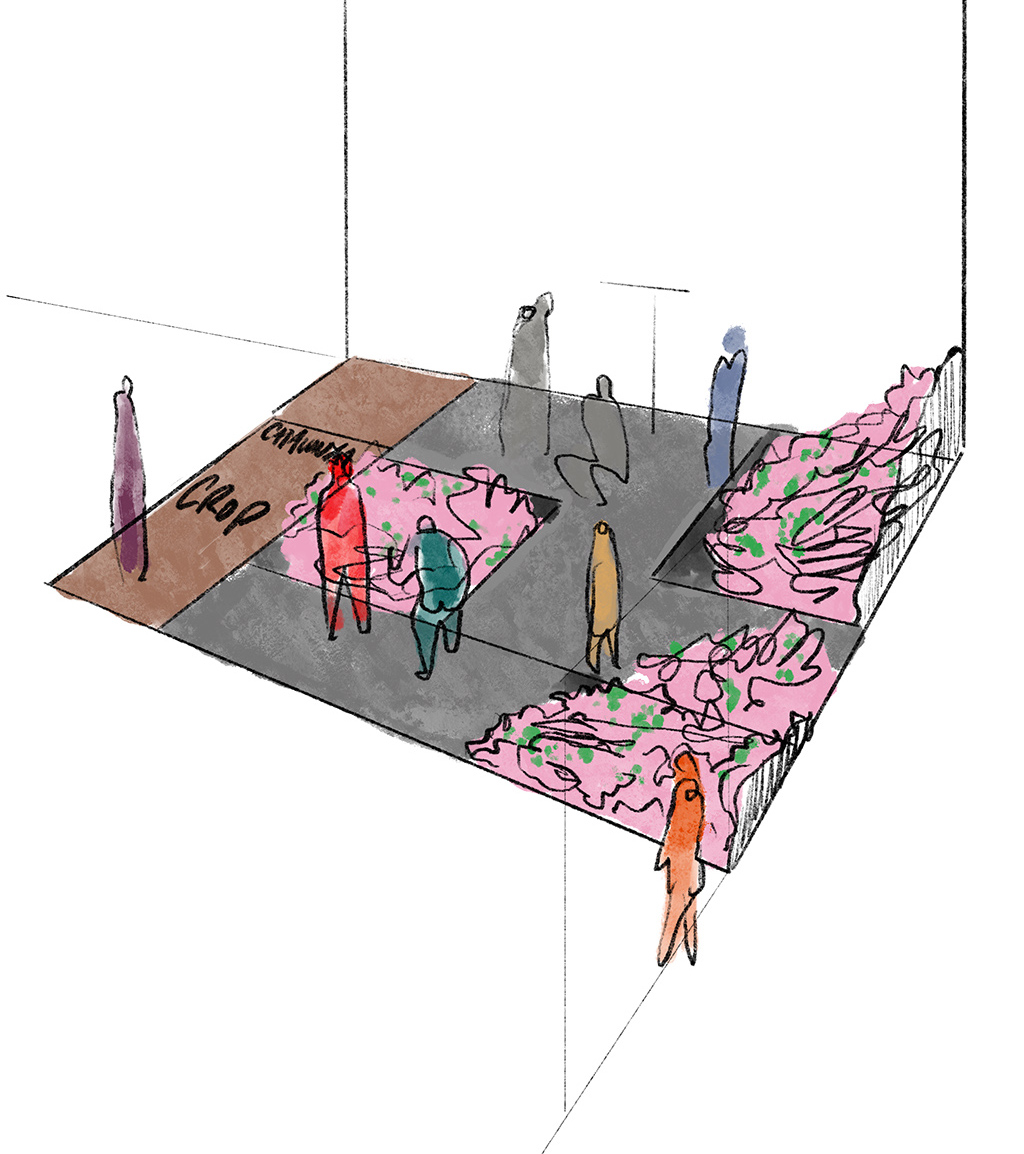
CROP
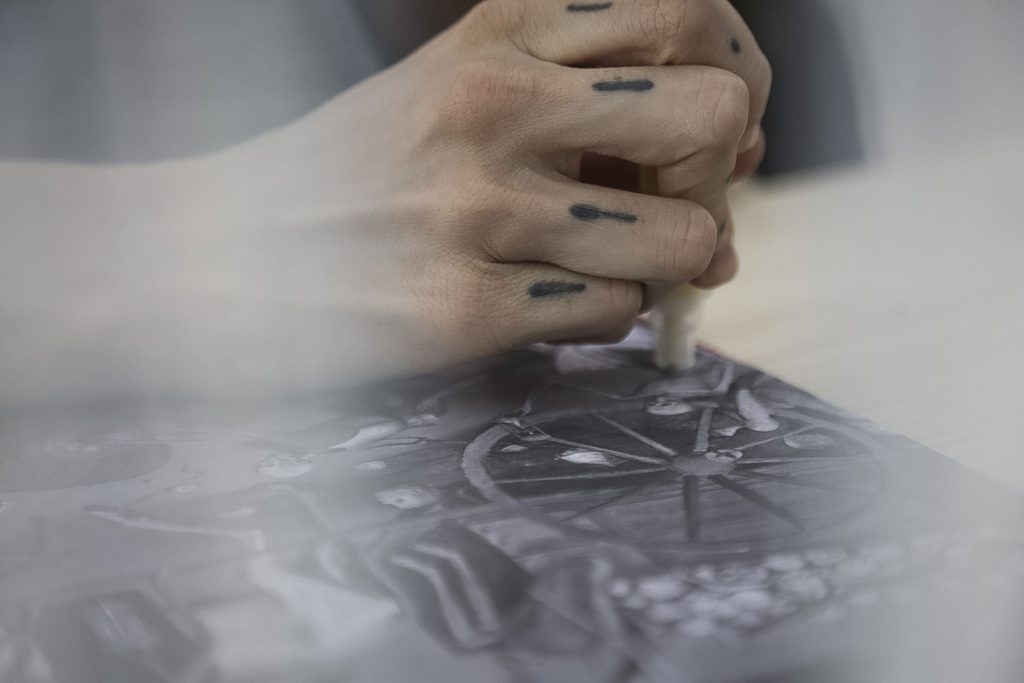
Raimon Rius
To achieve these objectives, the first step has been to conceive the projects as group creations, which intrinsically implies dialogue and reflection during the work process. The design of the installations has been entrusted to a small team of creators formed for the occasion, made up of both scenographers and professionals from other disciplines of the performing arts with their own views and experiences that contribute diversity and artistic richness. We believe that collaboration, exchange, meeting and fusion between disciplines are both consubstantial with and defining of the performing arts and differentiate them from other areas of contemporary creation. None of this would make sense if, in addition, the creative team was not given a voice, encouraging them to work on the main theme of PQ23, THE RARE, based on what concerns, interests, challenges and resonates with them as creators, as spectators, but especially as members of a specific generation.
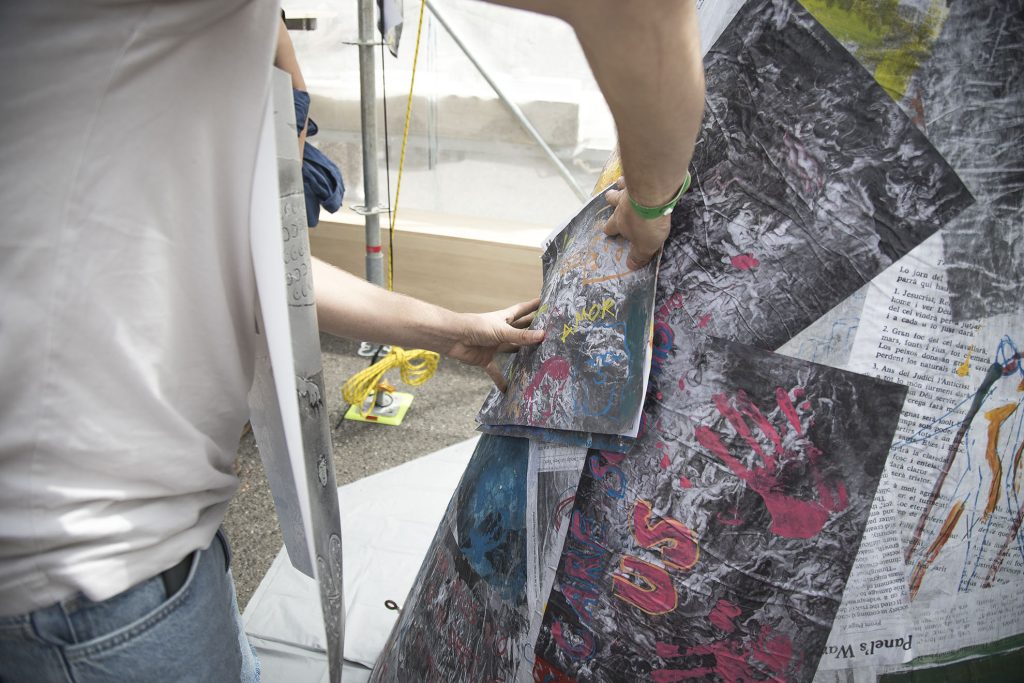
Efforts have been made to formally break with the exhibition tradition – which usually creates showcases of artefacts, photographs and drawings – and give the spectators the opportunity to receive, understand and enjoy stage design based on action, EXPERIENCE, through the live communicative act, the primary meaning of scenic art of which scenography is a part. It has been relatively few years since the scenographers in Catalonia have explored a more autonomous aspect of their profession, more connected to the precepts of artistic installation, performance or live art. The curatorial team sought to strengthen this aspect of scenographic creation. For the project’s creative teams, this was a challenge and, at the same time, a stimulus to explore new formats and research the expressive and narrative capacity of the scenographer's own tools. Moreover, the general curatorial team of the PQ in recent editions has had a special interest in focusing on this aspect of creation, proposing non-conventional diaphanous exhibition spaces in which visitors wandered among a myriad of stimuli while being given the possibility of experiences and opportunities for dialogue and contact with the creators. From Catalonia we have sought to explore the fields of interaction and leisure exchange, always ensuring that the creations have a quality and visual interest so that, as long as no action takes place that activates the installation, the device continues to challenge the visitor visually and scenically.
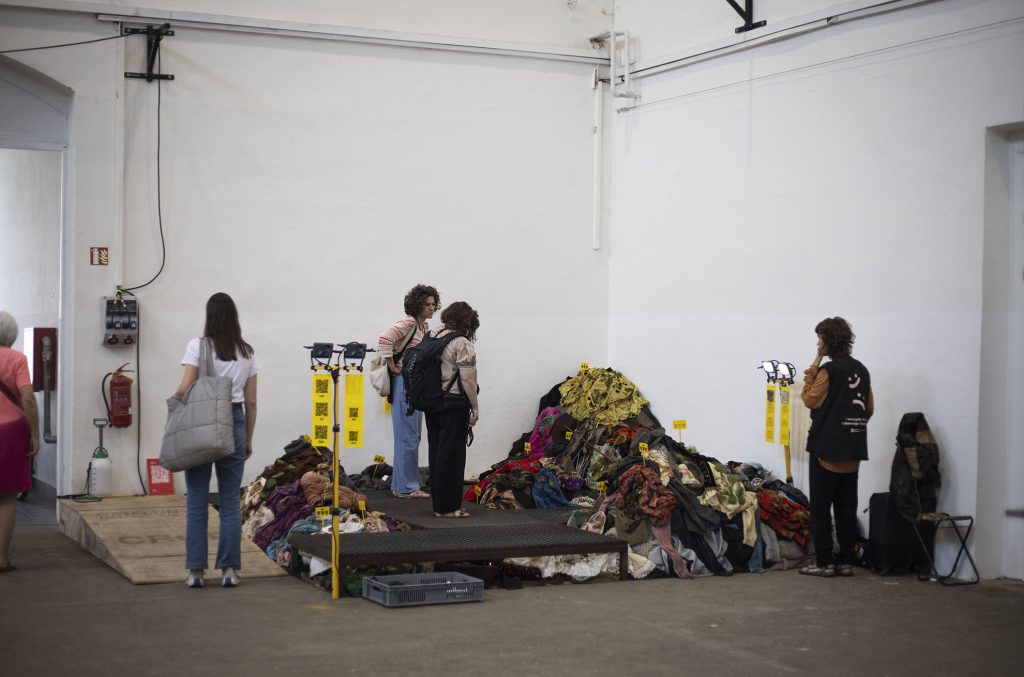
The last question we put on the game board in this edition was the costumes to use them as the driver and epicentre of creation. It is unusual in projects like this one that the space does not articulate the discourse and conceptualisation of the installation. The aim has been to work with CLOTHING to reflect on the MEMORY of the bodies that inhabit it, its potentialities or scenographic play it offers.
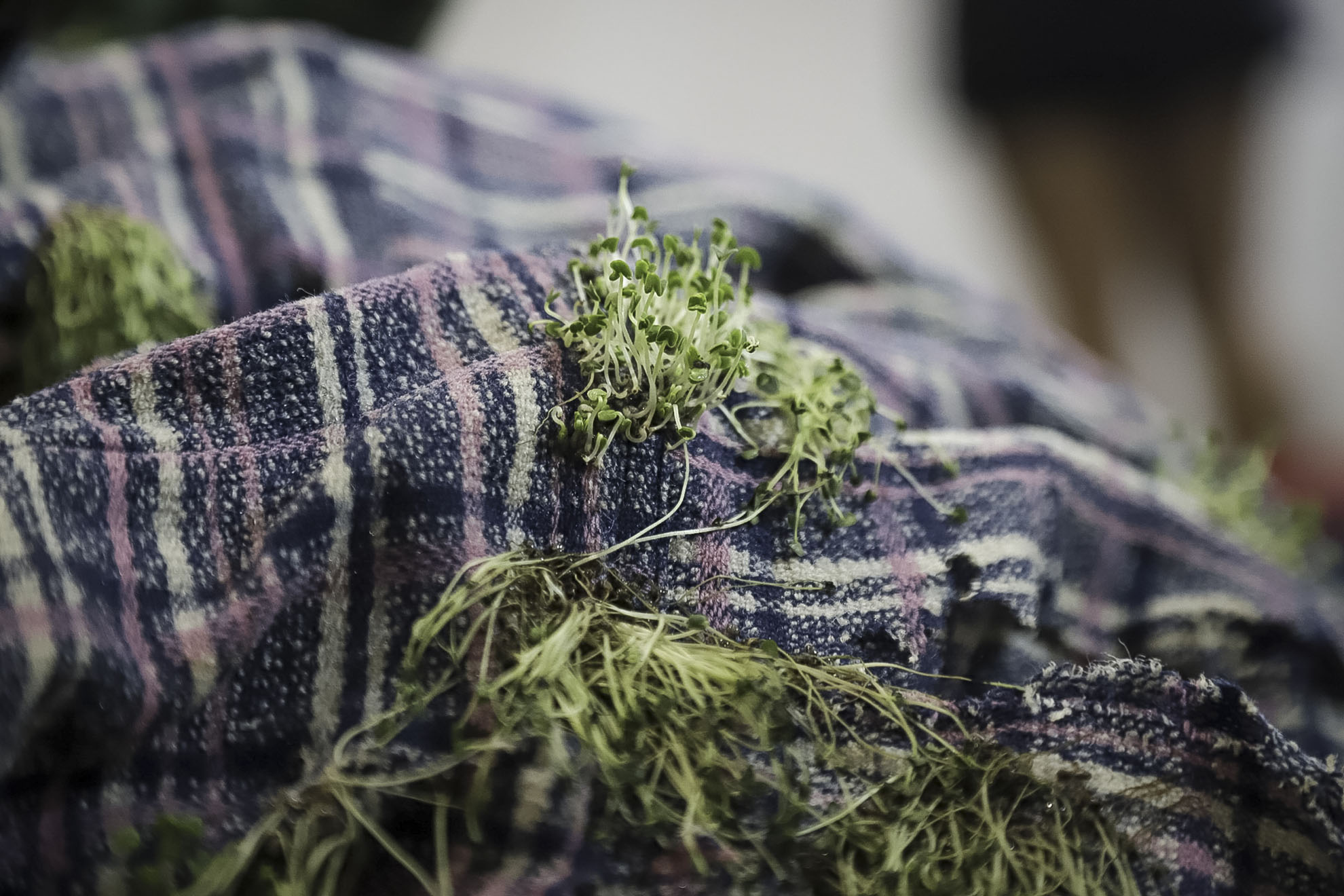
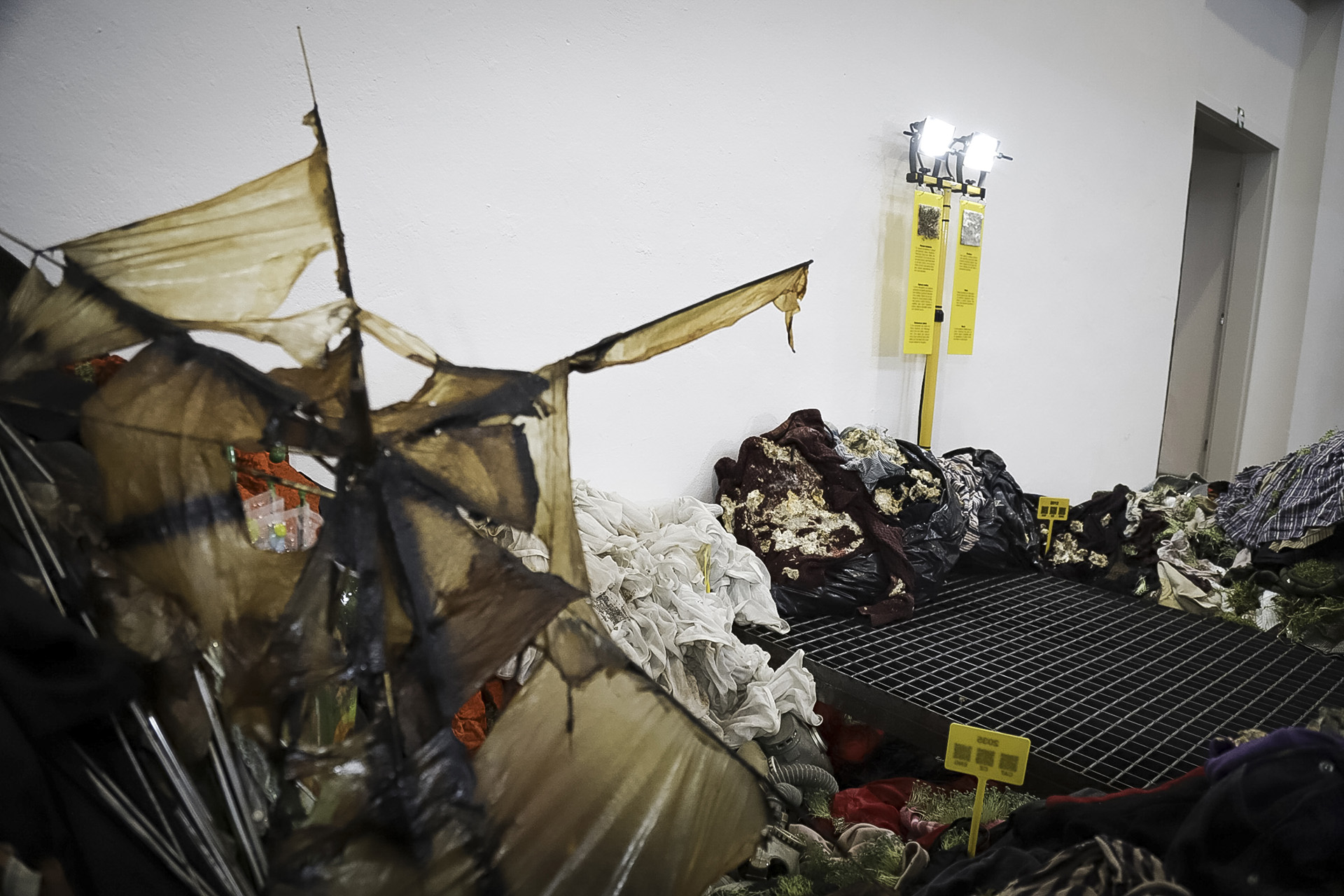
CROP

ČT art Award for the Most Socially Sensitive Exhibition.
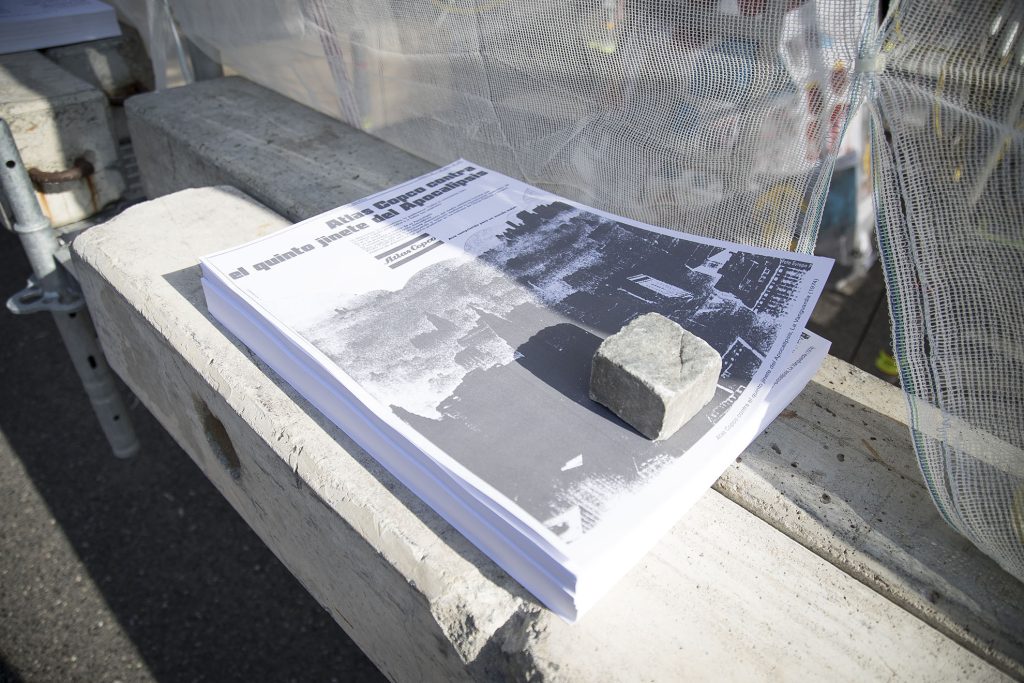
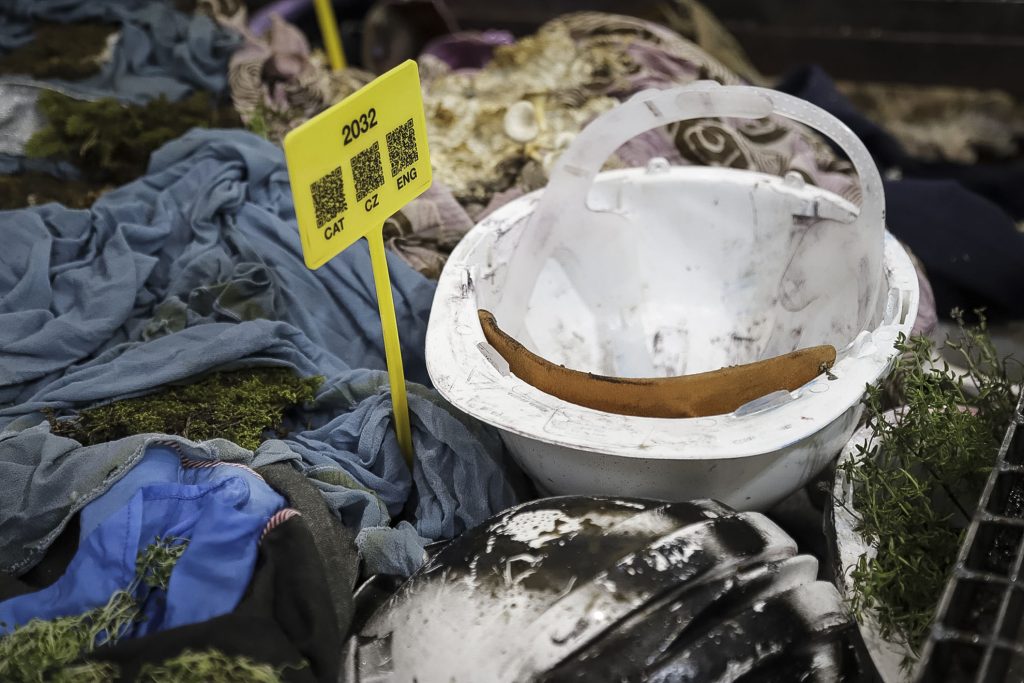
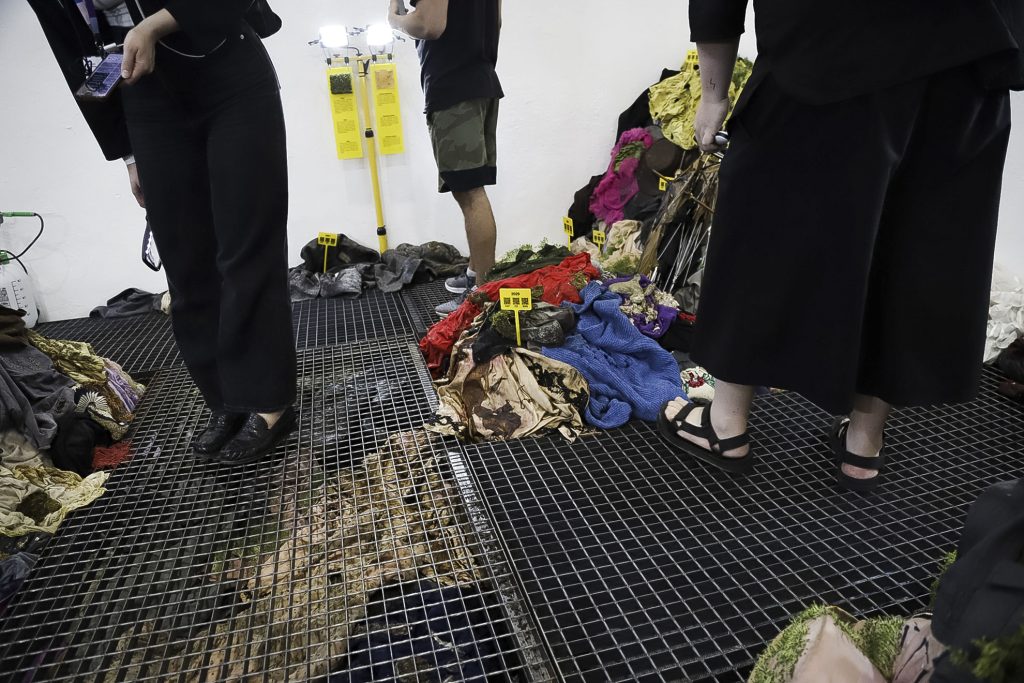
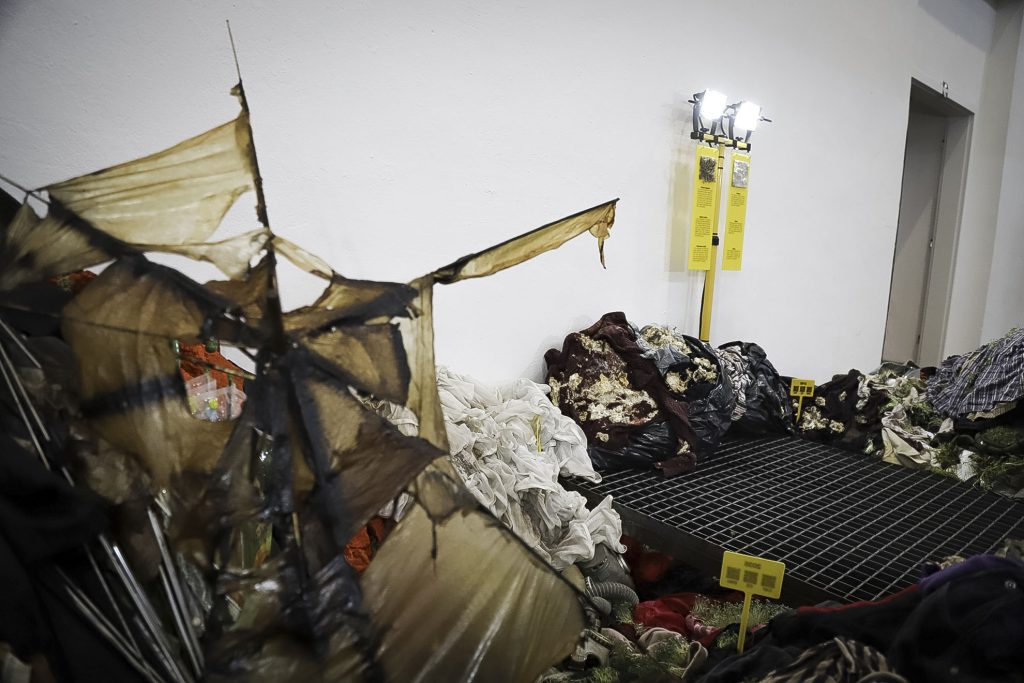
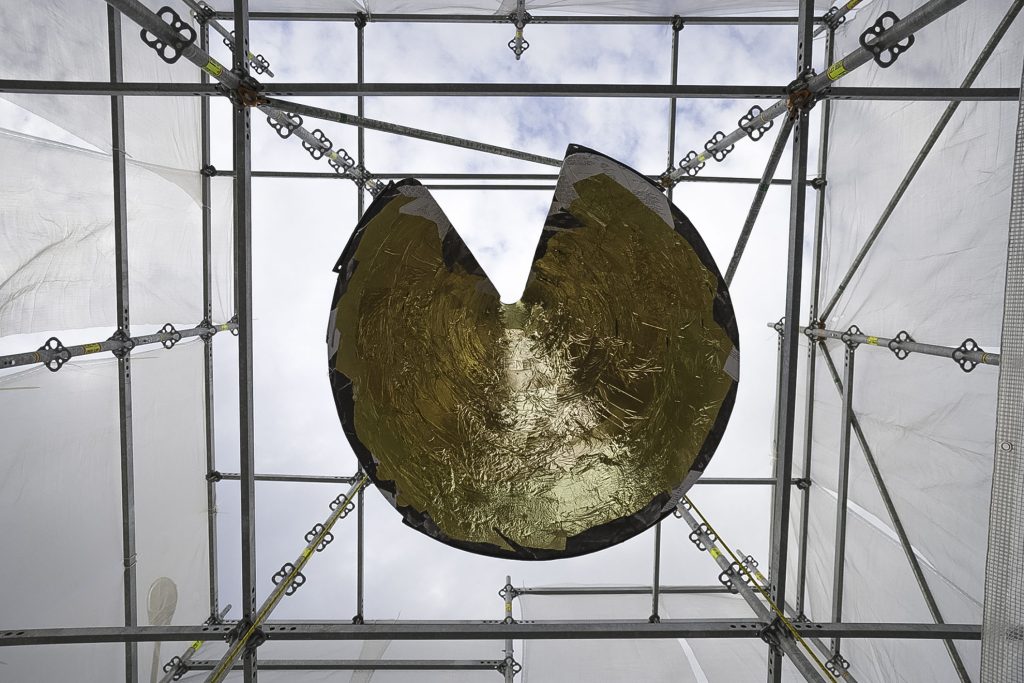
CROP is the project presented at the Exhibition of Countries and Regions, designed by Raquel Cors, Albert Pascual, and Carlota Ricart.
↓ Download the dossier.


Photographies by Joan Martínez
The Chant of the Sybil
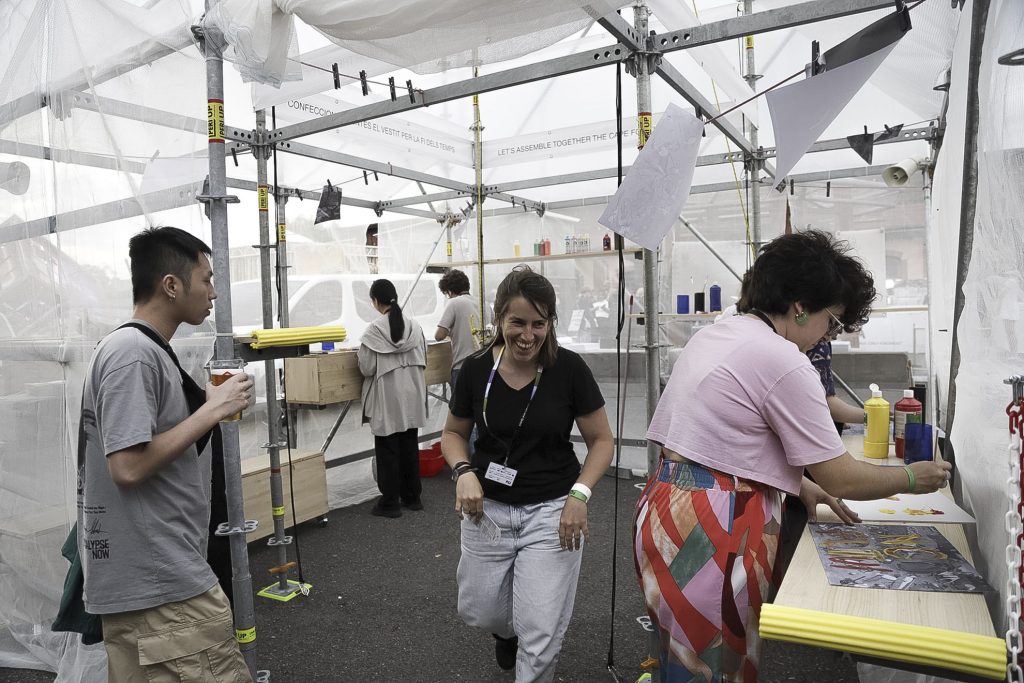
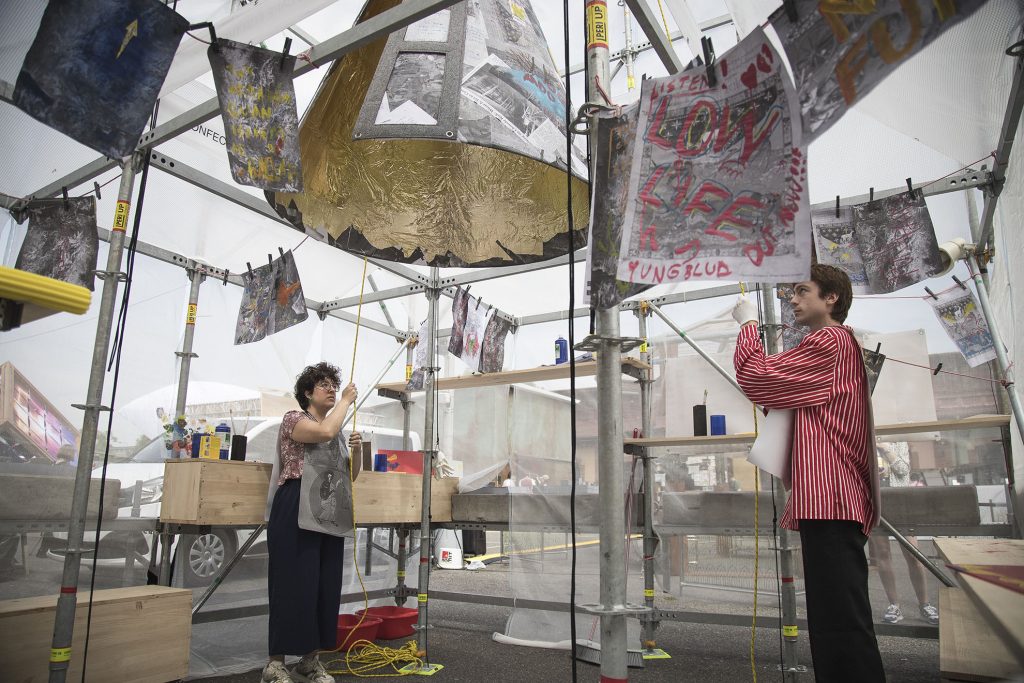
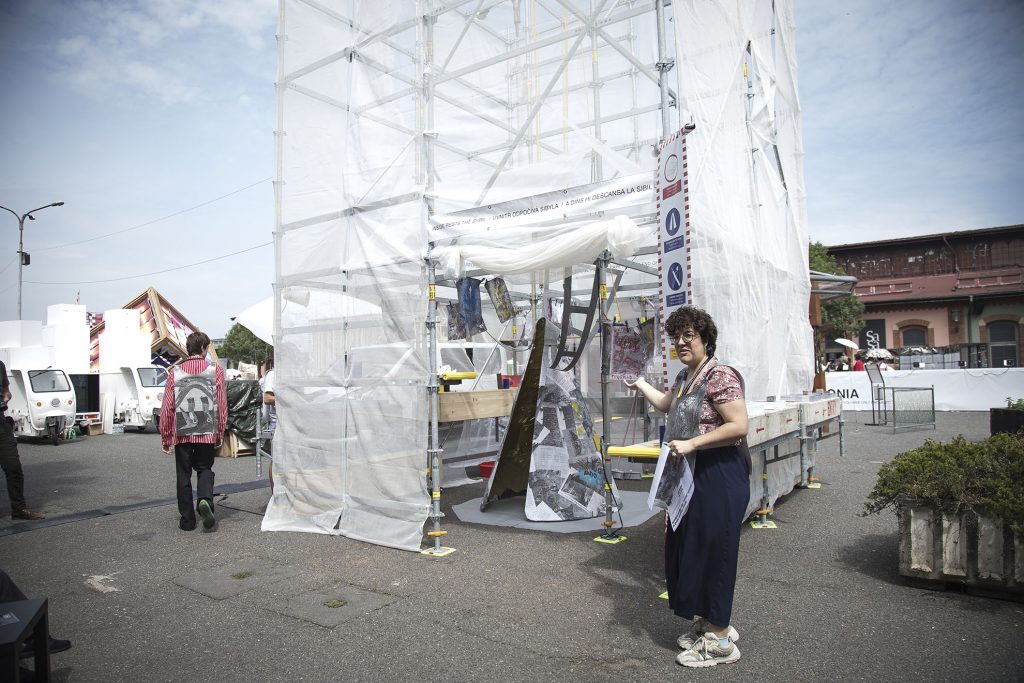
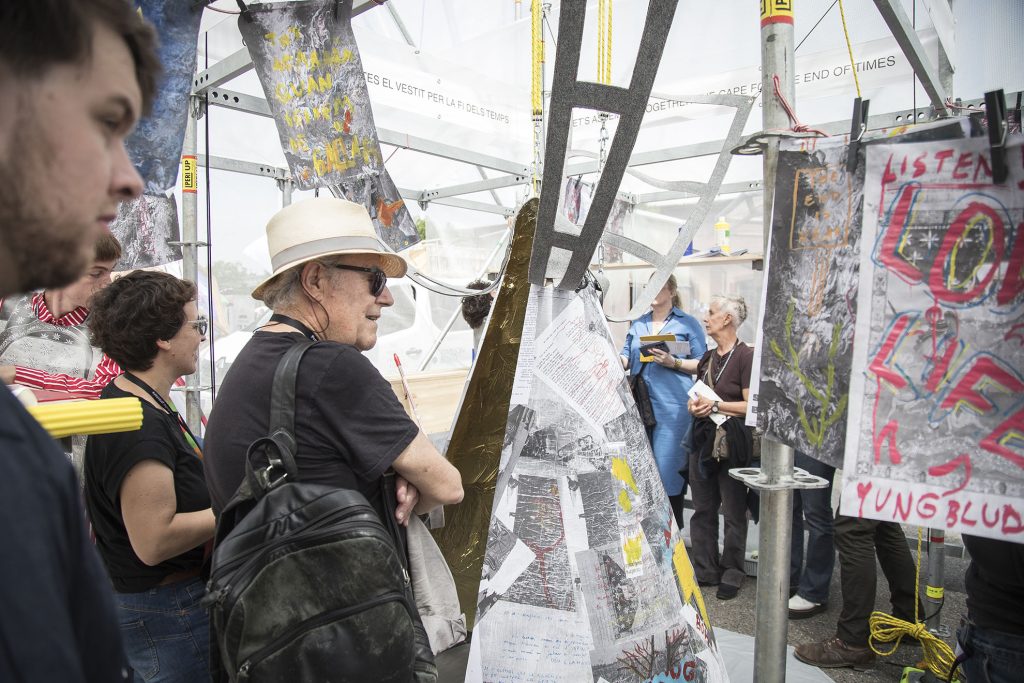
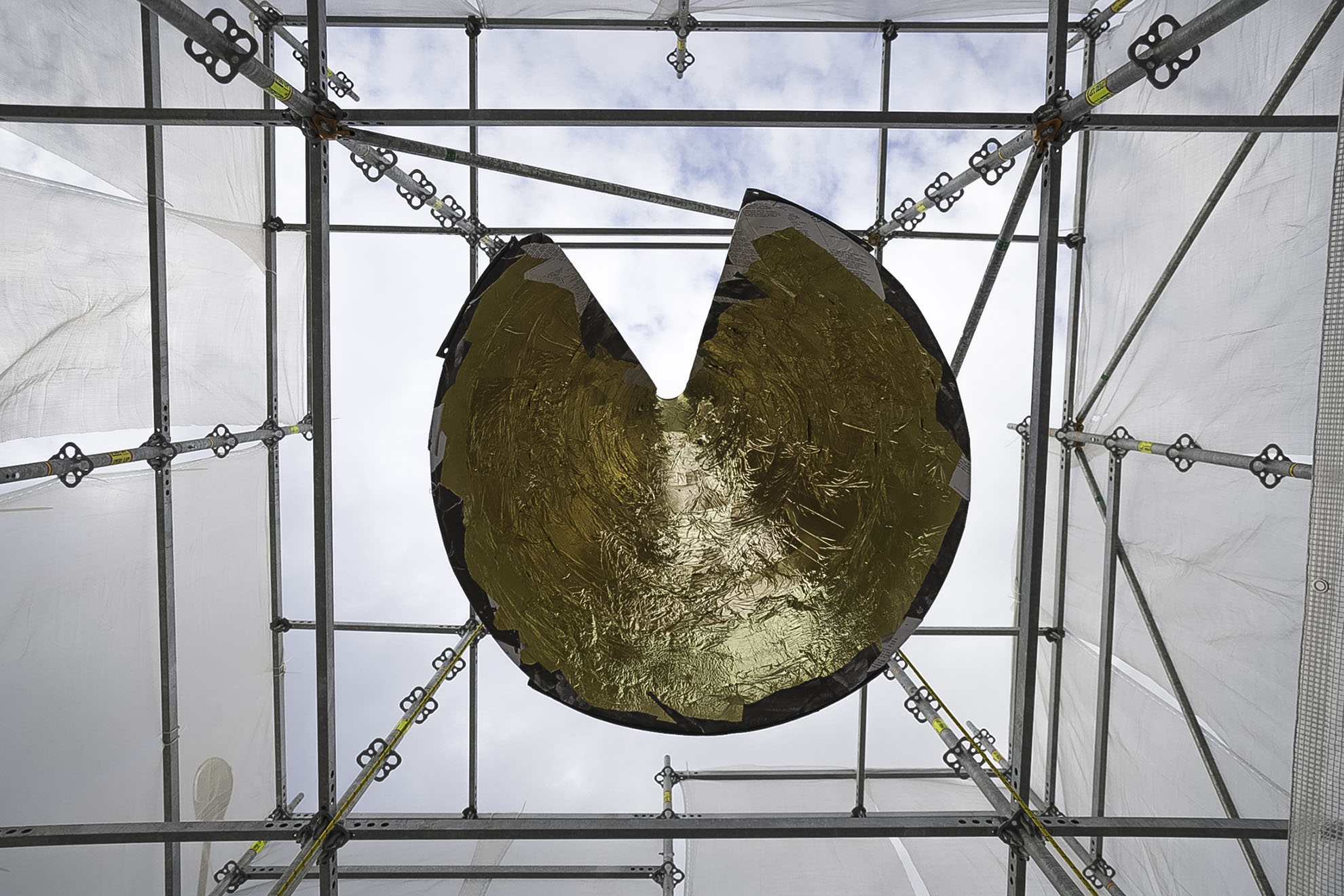
The Chant of the Sibyl is the project presented at the Student Exhibition, designed by Quim Palmada, Pol Roig, and Mireia Sintes.
↓ Download the dossier.


Photographies by Joan Martínez


Images of the project, the model, and the public presentation of the process. © Mireia Sintes
Fragments II
The set designer Montse Amenós exhibited the model of the set design for the show Patetisme il·lustrat by Carles Santos at the Fragments II exhibition.
↓ Download the dossier.


Pictures of the exhibition by Joan Martínez


Pictures of the model by Montse Amenós and Marc Salicrú
Pictures of the original show by May Zircus
Credits
CATALUNYA AT PQ23
CO-ORGANIZED BY
Institut del Teatre
Institut Ramon Llull
TEAM FROM INSTITUT DEL TEATRE INVOLVED IN PROJECT PQ23
Curators: Marta Rafa Serra and Pau Masaló Llorà
Technical Head: Mercè Lucchetti
General Director of IT: Sílvia Ferrando Luquin
Director of Cultural Services: Jordi Fondevila Fernández
Management: Toni Pérez Rodríguez
TEAM OF THE EXHIBITION CROP FROM THE SECTION COUNTRIES AND REGIONS
Concept and design: Raquel Cors Munt, Albert Pascual Nogué, and Carlota Ricart Amenós
Research on textile crops: Sara de Ubieta
Sound design: Rodrigo Rammsy
Text translation: Pere Bramon (ENG) and Tamara Precek (CZ)
Voices: Anna Pérez Moya (CAT / ENG) and Tamara Precek (CZ)
TEAM OF THE EXHIBITION THE CHANT OF THE SIBYL FROM THE STUDENT SECTION
Concept and design: Quim Palmada Belda, Pol Roig Valldosera, and Mireia Sintes Garcia
Assistance in construction: Vilma López
TEAM OF THE EXHIBITION PATETISME IL·LUSTRAT FROM FRAGMENTS II SECTION
Model author: Montse Amenós, set designer
Assistant: Adrià Pinar
Model photographs: Montse Amenós and Marc Salicrú
Photographs of the original assembly: May Zircus
STUDENTS WHO HAVE COLLABORATED IN THE PARTICIPATION OF CATALONIA AT PQ23
Support for assembly/disassembly and audience assistance: Alicia Leiva, Palmira Sabaté, Aleix Terrés, Hannah Blisky, Nuria Ginestà, Sandra Cruz, Alba Valls, Carme Mira
Production support: Clara Climent, Gerard Casas
Photography: Joan Martínez
Support for graphic reporting: Helena Mateos
Support for audiovisual reporting: David Corral
Support for technical direction: Maria Vaillo
THE WEB ARCHIVE
Audiovisual reporters: Meritxell Colell and Elena Molina
Literary reporter: Sebastià Portell
Graphic reporter: Raimon Rius
Design: Pau Masaló Llorà
Programming: Llos&
L'arxiu-web
"Falling snow is perhaps the purest manifestation of uncontrollabillity. We cannot manufacture it, force it, or even confidently predict it, at least not very far in advance. What is more, we cannot get hold of it or make it our own. Take some in your hand, it slips between your fingers. Bring it into the house, it melts away. Pack it away in the freezer, it stops being snow."
Hartmut Rosa
Live art cannot be preserved, but from the outset we, as curators of this project, have felt the conviction and responsibility to do so. The human and creative team involved in participating in the Prague Quadrennial is very extensive and has worked for almost three years. Everything produced during this time, along with the experience of the ten days of the festival, had to be brought together in some way.
The paradox of wanting to capture what is ephemeral is somewhat romantic but is not a chimera – call us daring. For us, it was not about preserving the works themselves, but everything around them, what they have left behind. This is what drives this web archive, the desire to generate and gather thoughts, images and accounts that make the intangible visible, making it available to others – to you, who are reading– to be able to re-view, re-think, re-memorise or re-use. It was born to give virtual and playful continuity to the unique experience that was the Catalan PQ23 project.
Contemporary archiving has been an ideal framework to explain our project, since it does not understand the archive in a static manner, but finds part of its potential in fragmentation and does not necessarily imply a temporality or a linear reading. If we wanted our installations and actions to respond to two basic questions – that they were interactive experiences for visitors and that they challenged them, giving them space for reflexion – we would not have been consistent in creating a website that built a collective memory with a unique and guided reading.
Our archive is a combination of materials that do not seek to justify or describe what happened. Thus, it is presented through six concepts that have been fundamental and central to the presence of Catalonia in the PQ23, but we do not want to impose an order or a hierarchy. Future, strangeness, clothing, memory, experience, trace and Catalonia. Getting lost in each of them means discovering fragments and traces of the three projects that offer visitors an active and personal experience, allowing them to be carried away by a random surf or plotting a personal story made up of their interests and their omissions. It will always be a partial story, like memory, made up of intersections, juxtapositions and simultaneities that dismantle the fiction of the time and narrative linearity. Paths through the archive can be endless just like the experiences of the installations in Prague.
The archive is, for us, a collective creation, the voice of many voices. It brings together materials of diverse nature as well as gazes, from inside and outside. In addition to the voices of the design teams and the curators, there is the voice of four creators from diverse worlds such as the audiovisual creation, the graphic expression or literature. We have invited them to join us and explore our journey to enrich it and provide it with unique approaches. Sebastià Portell has activated the words, Raimon Rius has played with stroke, and Meritxell Colell and Elena Molina with the audiovisual image. The students Helena Mateos, David Corral and Joan Martínez from the Escola Superior d’Art Dramàtic (ESAD) at the Institut del Teatre have also contributed their perspectives. All of them make possible this kaleidoscope full of resonances and layers.
Finally, the archive also has to do with care, with the desire to value and protect, not only the work and the documents but the artist who created them. It is a way of recovering time that was private, for some, so that it belongs to the community and has a social and historical significance.
Catalunya at PQ23
The Institut del Teatre has participated for the eighth time in the Prague Quadrennial of Performance Design and Space1 driven by the capacity of this well-established international event as a platform for meeting and reflecting on the visual aspects of scenography, from a contemporary, diverse and practical perspective.
Once again, in 2023 CATALONIA has shown its scenographic and theatrical potential by bringing to Prague pieces by new and established creators and also performing arts students. They have also had the opportunity to meet and forge connections with the other participants, their interests and their practice. In this fifteenth edition, the Catalan presence has focused on participating in the two major exhibitions, Countries and Regions Exhibition (CRE) and Students Exhibition (SE), and in the section Fragments II, the latter featuring theatre models. The installations presented were complemented by guided visits and two workshops related to the installation Crop, which represented Catalonia in the CRE.
Moreover, the Institut del Teatre has asserted its value as a centre for training, creation, research, documentation and dissemination of the performing arts in Catalonia, and the Institut Ramon Llull as a leading institution which sheds light on the country's artistic potential.
1
In the field of the PQ the terms performance design and scenography are used indistinctly to refer to all the aspects of stage design, including the space, costumes, lighting, sound and theatre architecture itself. In this document, we will use scenography in the same way the term.
CURATORIAL PROJECT
Usually, the general curatorship team of the contest provides all the participants with a broad main theme that structures most of the sections and activates reflection on scenographic practice in relation to the contemporary context. In parallel, the curators of Catalonia worked with specific lines of interest to substantiate and make the projects presented more specific.
Historically, international exhibition events have provided the ideal setting for participants to display their already existing scenographic design projects or to present major names from the country; recognised creations that show what its professionals and students know how to do best, ensure success and TRACE the artistic tradition of the country. Catalonia has sought an approach different from past editions, putting the potential of its professionals at the core and with a new creation project specifically designed for PQ23.
In general terms, we could say that the field of scenography in Catalonia has little experience in research. Despite having demonstrated a high creative capacity for innovation, the performing arts sector is small, centralised and with budgets that do not allow an exploration of the visual aspect related to theatrical creation, since very often this requires time and a major technical and production investment for it to be developed. The resources and infrastructure provided by the leadership of the Institut del Teatre and the Institut Ramon Llull and the exhibition platform of the Prague Quadrennial are an unbeatable framework to try to deal with some of these shortcomings and consider Catalan participation as an opportunity to explore and expand the frontiers of scenographic expression, allowing for an authentic, bold, innovative and FUTURE representation.
To achieve these objectives, the first step has been to conceive the projects as group creations, which intrinsically implies dialogue and reflection during the work process. The design of the installations has been entrusted to a small team of creators formed for the occasion, made up of both scenographers and professionals from other disciplines of the performing arts with their own views and experiences that contribute diversity and artistic richness. We believe that collaboration, exchange, meeting and fusion between disciplines are both consubstantial with and defining of the performing arts and differentiate them from other areas of contemporary creation. None of this would make sense if, in addition, the creative team was not given a voice, encouraging them to work on the main theme of PQ23, THE RARE, based on what concerns, interests, challenges and resonates with them as creators, as spectators, but especially as members of a specific generation.
Efforts have been made to formally break with the exhibition tradition – which usually creates showcases of artefacts, photographs and drawings – and give the spectators the opportunity to receive, understand and enjoy stage design based on action, EXPERIENCE, through the live communicative act, the primary meaning of scenic art of which scenography is a part. It has been relatively few years since the scenographers in Catalonia have explored a more autonomous aspect of their profession, more connected to the precepts of artistic installation, performance or live art. The curatorial team sought to strengthen this aspect of scenographic creation. For the project’s creative teams, this was a challenge and, at the same time, a stimulus to explore new formats and research the expressive and narrative capacity of the scenographer's own tools. Moreover, the general curatorial team of the PQ in recent editions has had a special interest in focusing on this aspect of creation, proposing non-conventional diaphanous exhibition spaces in which visitors wandered among a myriad of stimuli while being given the possibility of experiences and opportunities for dialogue and contact with the creators. From Catalonia we have sought to explore the fields of interaction and leisure exchange, always ensuring that the creations have a quality and visual interest so that, as long as no action takes place that activates the installation, the device continues to challenge the visitor visually and scenically.
The last question we put on the game board in this edition was the costumes to use them as the driver and epicentre of creation. It is unusual in projects like this one that the space does not articulate the discourse and conceptualisation of the installation. The aim has been to work with CLOTHING to reflect on the MEMORY of the bodies that inhabit it, its potentialities or scenographic play it offers.
Drawing by Raimon Rius
CROP
ČT art Award for the Most Socially Sensitive Exhibition.
CROP is the project presented at the Exhibition of Countries and Regions, designed by Raquel Cors, Albert Pascual, and Carlota Ricart.
↓ Download the dossier.
Pictures by Joan Martínez
The Chant of the Sybil
The Chant of the Sibyl is the project presented at the Student Exhibition, designed by Quim Palmada, Pol Roig, and Mireia Sintes.
↓ Download the dossier.
Pictures by Joan Martínez


Images of the project, the model, and the public presentation of the process. © Mireia Sintes
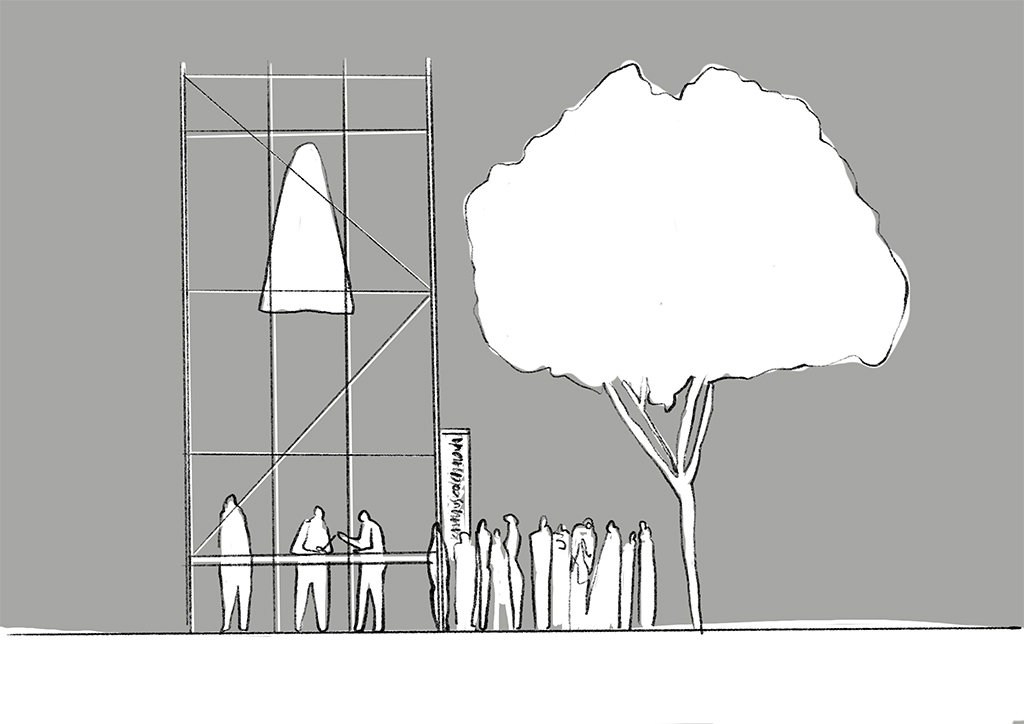
Drawing by Raimon Rius
Fragments II
The set designer Montse Amenós exhibited the model of the set design for the show Patetisme il·lustrat by Carles Santos at the Fragments II exhibition.
↓ Download the dossier.
Pictures of the exhibition by Joan Martínez
Pictures of the model by Montse Amenós and Marc Salicrú
Pictures of the original show by May Zircus
Credits
CATALUNYA AT PQ23
CO-ORGANITZAT PER
Institut del Teatre
Institut Ramon Llull
EQUIP DE L’INSTITUT DEL TEATRE INVOLUCRAT AL PROJECTE PQ23
Comissaris: Marta Rafa Serra i Pau Masaló Llorà
Cap tècnic: Mercè Lucchetti
Directora general de l'IT: Sílvia Ferrando Luquin
Director de serveis culturals: Jordi Fondevila Fernández
Gerència: Toni Pérez Rodríguez
CO-ORGANIZED BY
Institut del Teatre
Institut Ramon Llull
TEAM FROM INSTITUT DEL TEATRE INVOLVED IN PROJECT PQ23
Curators: Marta Rafa Serra and Pau Masaló Llorà
Technical Head: Mercè Lucchetti
General Director of IT: Sílvia Ferrando Luquin
Director of Cultural Services: Jordi Fondevila Fernández
Management: Toni Pérez Rodríguez
TEAM OF THE EXHIBITION CROP FROM THE SECTION COUNTRIES AND REGIONS
Concept and design: Raquel Cors Munt, Albert Pascual Nogué, and Carlota Ricart Amenós
Research on textile crops: Sara de Ubieta
Sound design: Rodrigo Rammsy
Text translation: Pere Bramon (ENG) and Tamara Precek (CZ)
Voices: Anna Pérez Moya (CAT / ENG) and Tamara Precek (CZ)
TEAM OF THE EXHIBITION THE CHANT OF THE SIBYL FROM THE STUDENT SECTION
Concept and design: Quim Palmada Belda, Pol Roig Valldosera, and Mireia Sintes Garcia
Assistance in construction: Vilma López
TEAM OF THE EXHIBITION PATETISME IL·LUSTRAT FROM FRAGMENTS II SECTION
Model author: Montse Amenós, set designer
Assistant: Adrià Pinar
Model photographs: Montse Amenós and Marc Salicrú
Photographs of the original assembly: May Zircus
STUDENTS WHO HAVE COLLABORATED IN THE PARTICIPATION OF CATALONIA AT PQ23
Support for assembly/disassembly and audience assistance: Alicia Leiva, Palmira Sabaté, Aleix Terrés, Hannah Blisky, Nuria Ginestà, Sandra Cruz, Alba Valls, Carme Mira
Production support: Clara Climent, Gerard Casas
Photography: Joan Martínez
Support for graphic reporting: Helena Mateos
Support for audiovisual reporting: David Corral
Support for technical direction: Maria Vaillo
THE WEB ARCHIVE
Audiovisual reporters: Meritxell Colell and Elena Molina
Literary reporter: Sebastià Portell
Graphic reporter: Raimon Rius